Every fall or two
For Ohio’s heavy clay soils, Ohio State’s turf team favors core aeration every fall or every other fall, in mid to late September.1

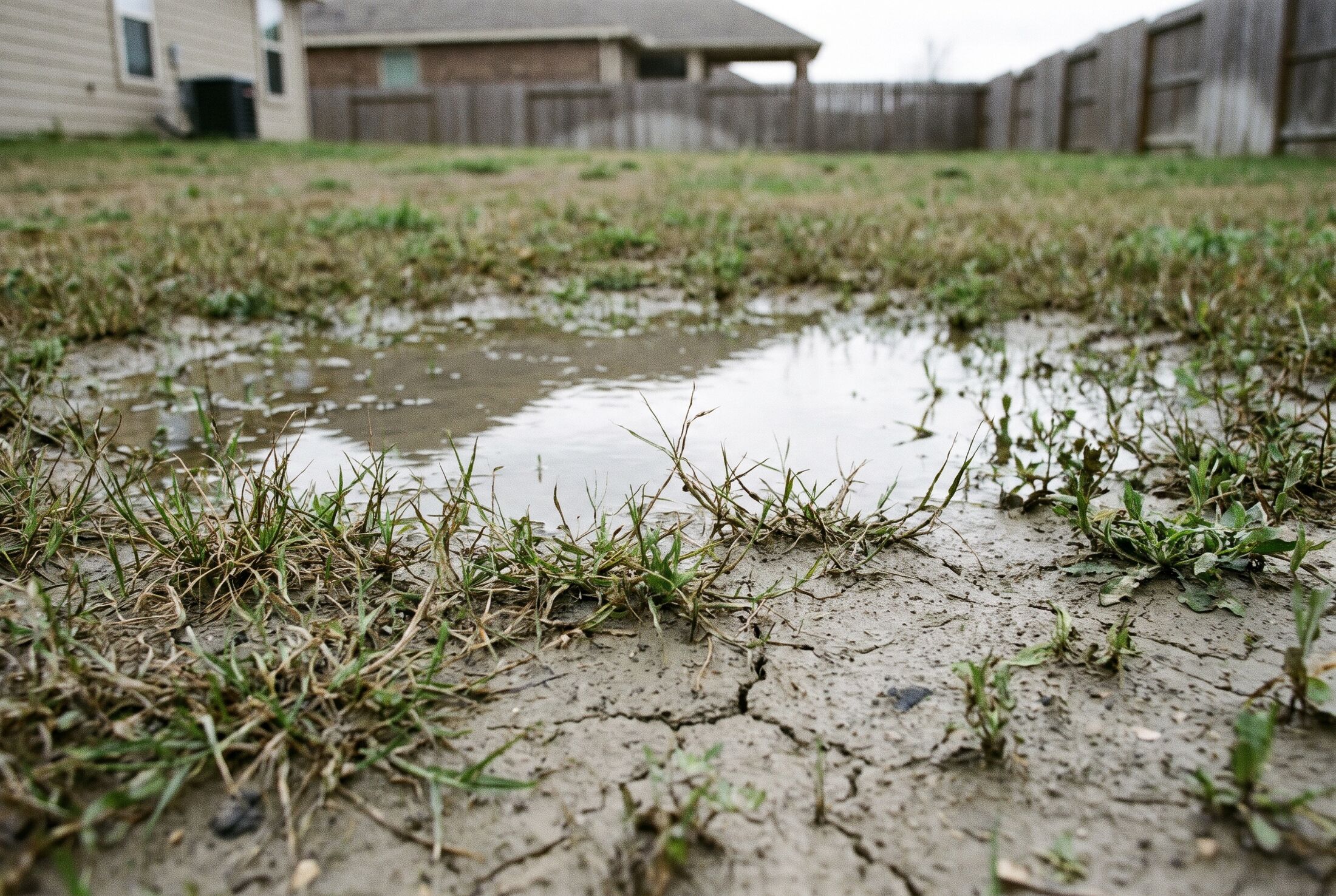
It puddles after a storm and bakes hard by August. You’ve seeded it, watered it and fed it, and that section still won’t take. The ground itself may be the problem.
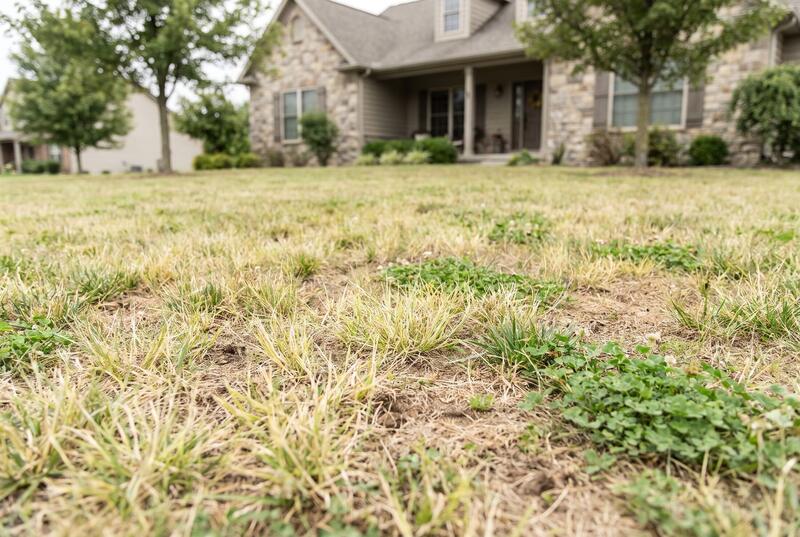
Ohio State says many lawns here, especially new ones, grow on soils with a lot of clay, and it names excavated soil from residential construction as a problem. Penn State adds that the subsoil at a building site is often severely compacted by construction, and that a lawn needs at least 4 to 6 inches of good topsoil.8, 2, 9
The University of Wisconsin explains what that does to grass: compacted soil limits water infiltration, reduces oxygen to the roots and physically restricts root growth. Cornell describes it as a massive block with no pore space, which is why water sits on top instead of soaking in.3, 10
For Ohio’s heavy clay soils, Ohio State’s turf team favors core aeration every fall or every other fall, in mid to late September.1
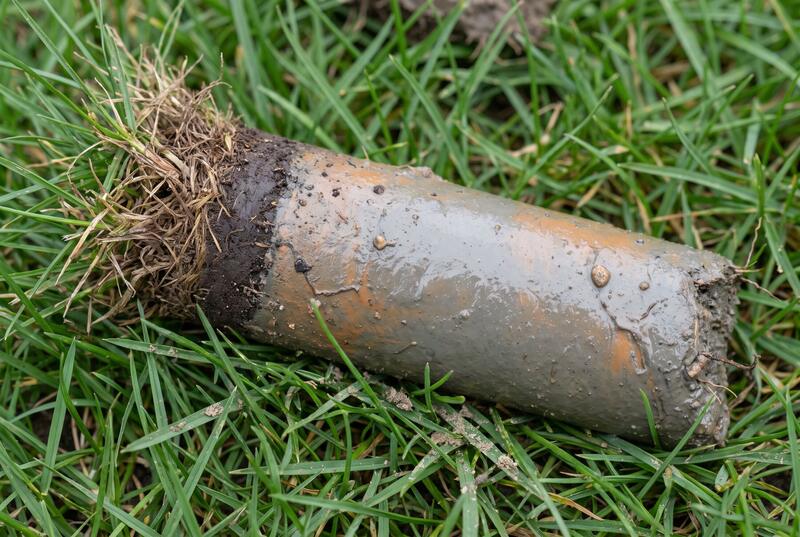
Ohio State says a typical drum aerator affects only about 5% of the lawn area in one pass, and that 2 to 3 passes are usually needed to make enough holes. Plugs typically run about 3 inches.2
The University of Wisconsin says drum aerators rarely get more than 2 inches into dry soil, and that dry lawns should be watered thoroughly 1 to 2 days before aerating.3
Plugs generally fall apart in several days to a few weeks, depending on rain, mowing and traffic. Illinois Extension says they can stay on the lawn and act like topdressing.3, 4
Ohio State’s best window for seeding in northern Ohio, with a cutoff of October 15. Illinois Extension says aeration holes give seed better soil contact, and seed that dries out won’t germinate.5, 6
Up to about half an inch helps by buffering temperature and moisture. Beyond that, Ohio State says it may block water, air and fertilizer.5, 7
Water sits on top and roots can’t get down.
Bob’s aerator pulls real soil plugs, opening a path for air, water and nutrients.
The clay is especially hard.
He makes multiple passes in different directions over the worst of it, in line with Ohio State’s guidance.
Seed never takes.
He overseeds right after aerating, so seed lands in contact with the soil instead of sitting on top.
The plugs look like a mess.
He’ll tell you to leave them. They break down on their own.
There’s hardly any topsoil at all.
He’ll talk through top dressing, and be straight with you that it’s a process rather than one visit.
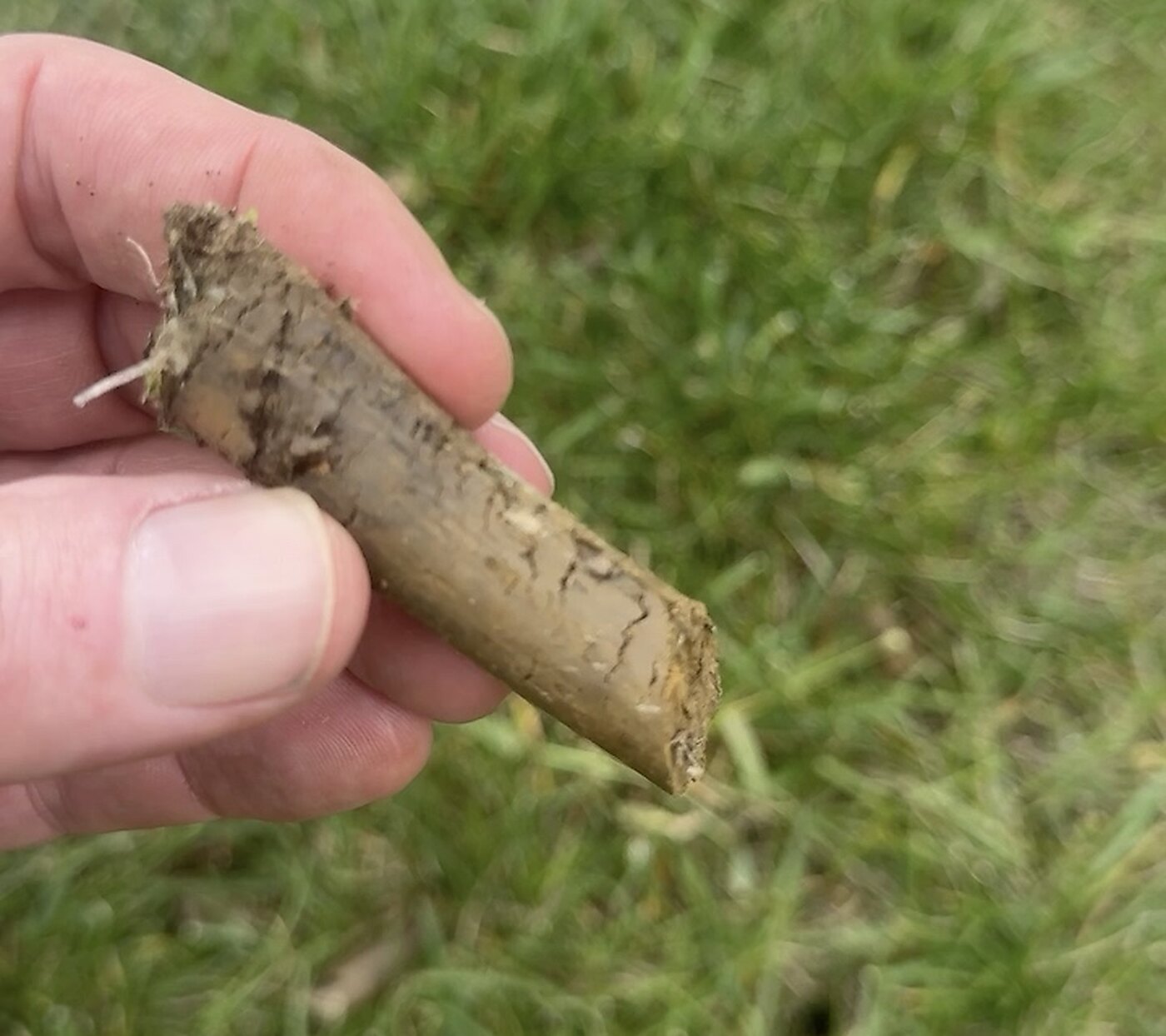
“It basically builds a better root system for the grass, rather than just putting it on top and having the root system start at the top.”
Bob, standing next to his aerator, on why he seeds right after core aeration: the seed that falls into the plug holes builds a deeper root system than seed that just sits on top.
Aeration helps, but the University of Wisconsin is honest that it gives only temporary relief from compaction. So on yards with almost no topsoil, Bob brings up top dressing: spreading a soil mix over the lawn, filling low spots and building up the layer the grass grows in.
Ohio State says to apply no more than a quarter inch at a time on an existing lawn, and pairs topdressing with core aeration in spring or fall. The University of Wisconsin adds that at least half of each grass leaf must stay visible, or the grass can die from lack of light. Real change takes repeated work, and for a severely compacted site Penn State describes ripping the subsoil or tilling organic matter in before a lawn is established.
“I use 50% topsoil, 50% peat moss. It helps break down the clay a little bit, and the soil gets a little looser, with better drainage for the grass.”
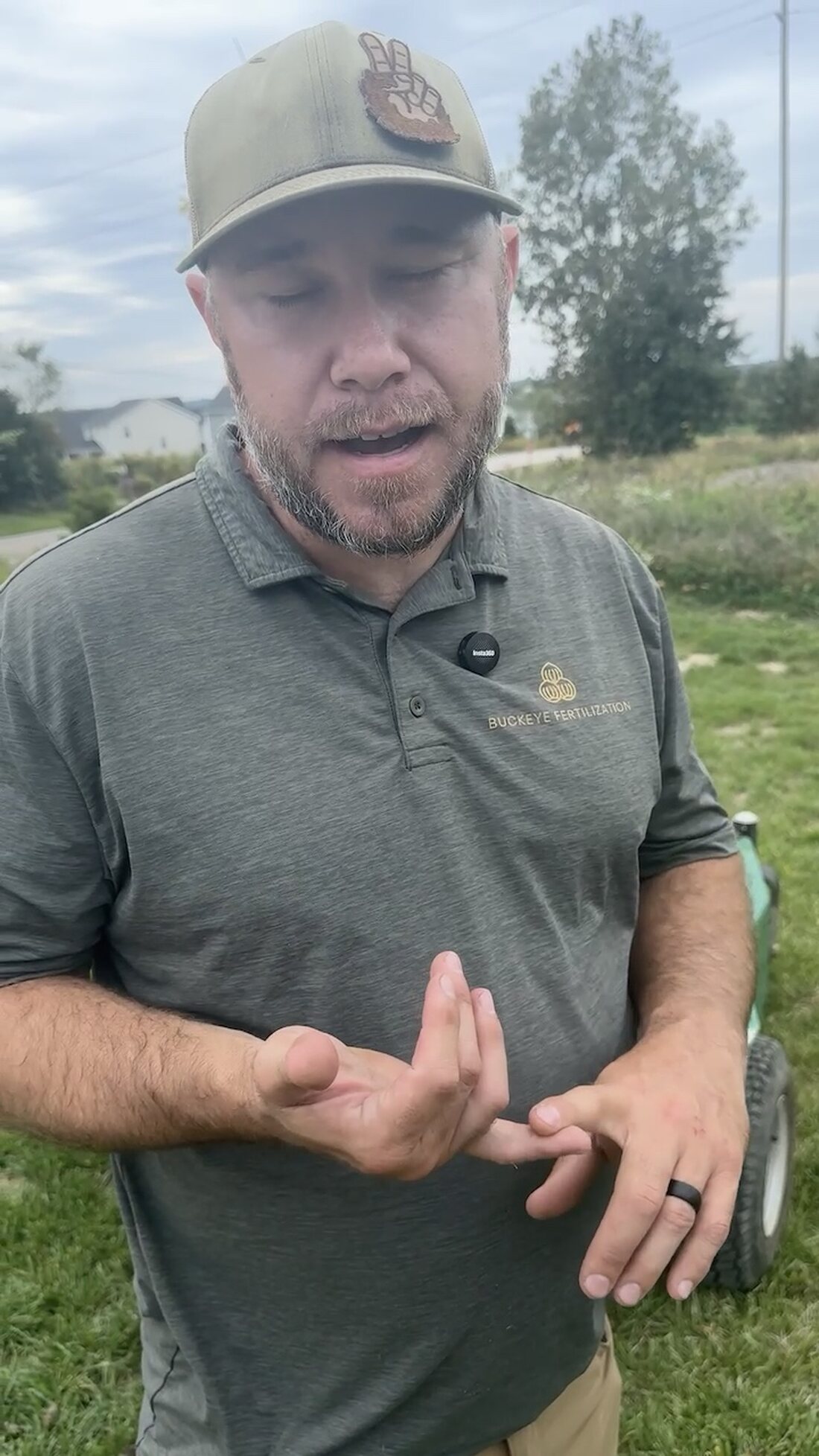
Bob will walk your property and write your 2027 plan for free, whether you hire him or not.
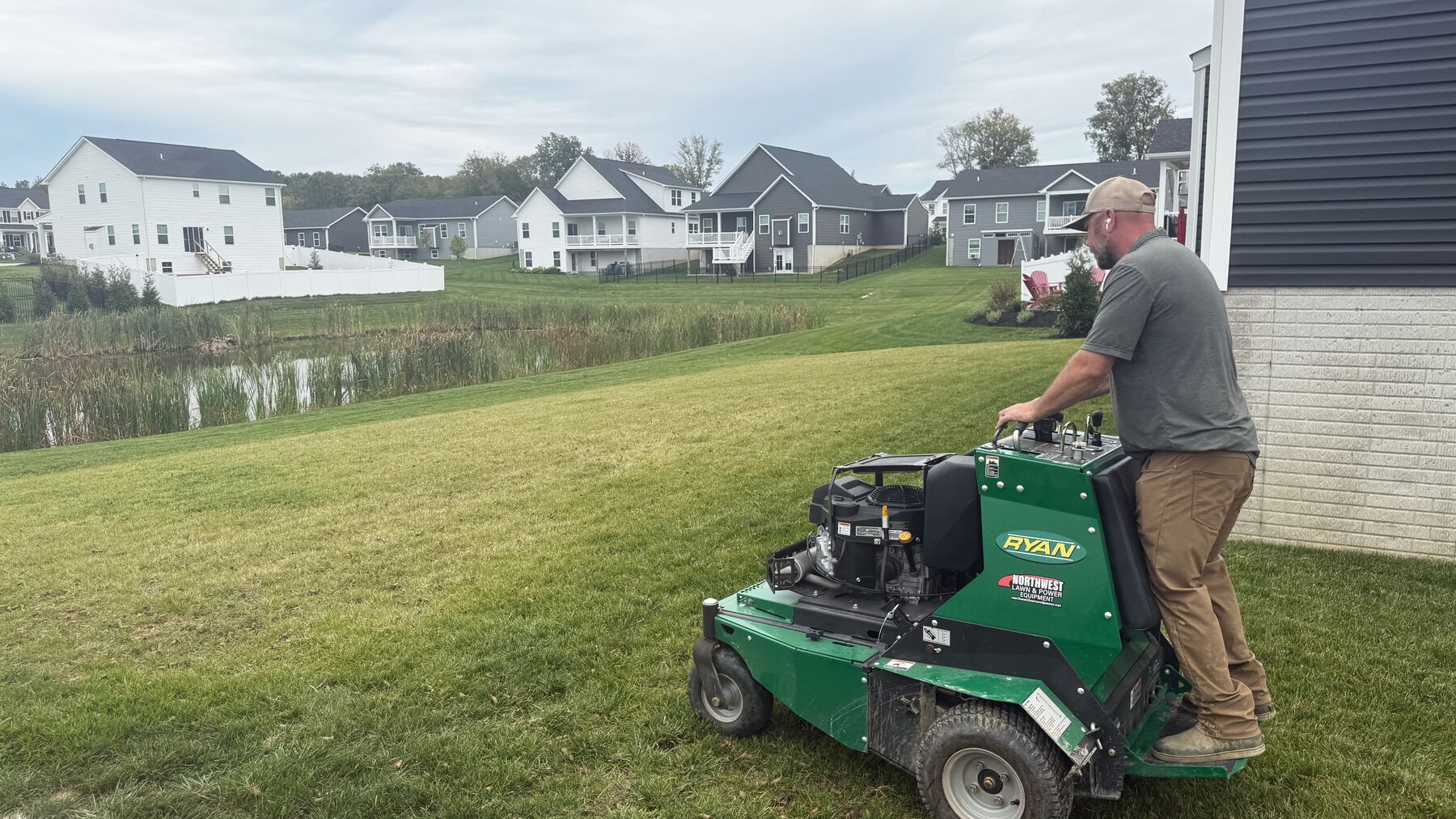
On hard clay this takes more than one season. The University of Wisconsin describes aeration up to twice a year for a year or more, and steady work is what changes a yard.
Tell Bob a little about the property. He’ll walk it, write the plan and go over it with you at no cost, whether you hire him or not. Would you rather talk it through?
(330) 636-6089