About 10 per sq ft
Ohio State’s action level for annual grub species. A healthy lawn tolerates a few, and Purdue says fewer than five rarely need treatment, so counting first matters.1, 2

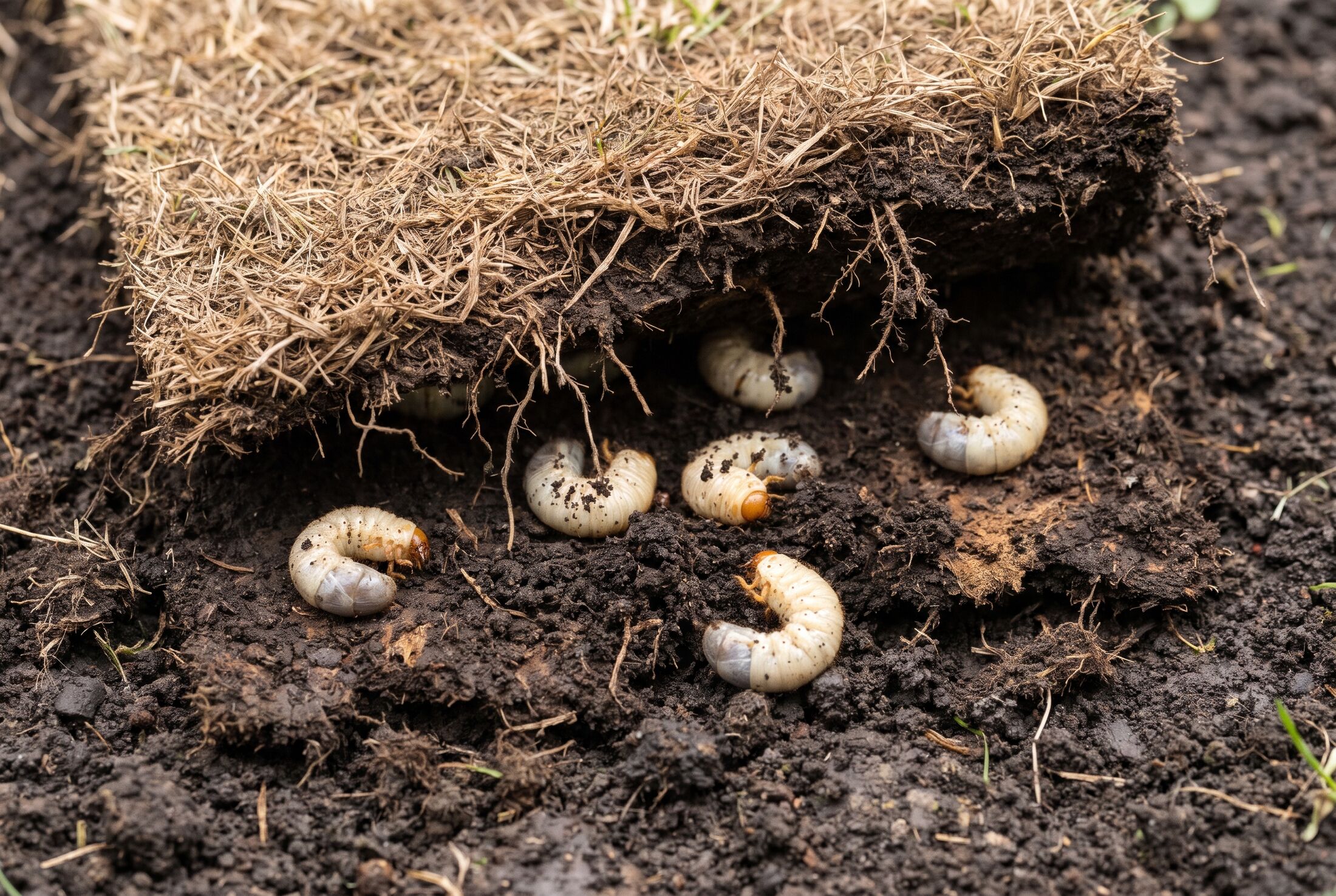
It looked like a dry spot. Then you noticed it feels spongy, something has been digging in it, and you can lift the grass right off the ground. Something may be eating the roots.
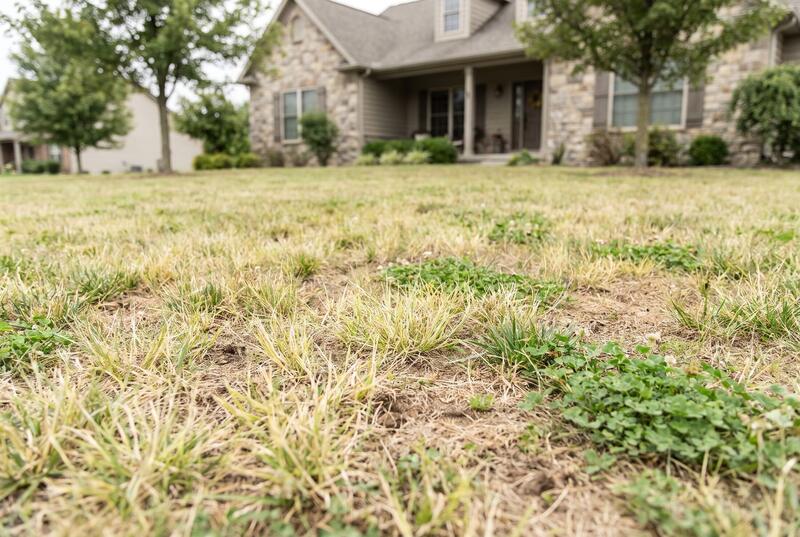
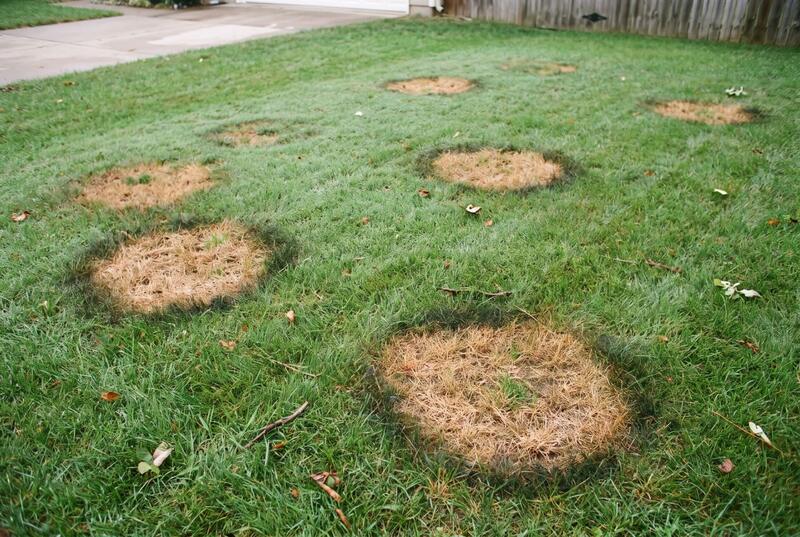
Ohio State describes white grub damage as irregular patches of dried, dead grass that resemble drought stress. In bad cases the turf pulls back and rolls up like a carpet. Often the first thing anyone notices is animals digging, because birds, raccoons and skunks are after the grubs.1
Japanese beetles and masked chafers are the most abundant grubs in Ohio turf. Masked chafers usually start emerging in mid-June, and Japanese beetles from the last week of June through July, laying eggs in moist soil. The grubs that hatch feed on roots at the thatch and soil line.1, 6, 7
Ohio State’s action level for annual grub species. A healthy lawn tolerates a few, and Purdue says fewer than five rarely need treatment, so counting first matters.1, 2
Ohio State’s window for scouting grubs in the soil. On home lawns it recommends samples every 10 to 15 feet in a grid.1, 3
Preventive products target young grubs and go down before damage shows, as early as late May or mid-June depending on the product. Curative products are for grubs already present, and they work better on small ones.1
Purdue reports late rescue treatments lose much of their effect once grubs have stopped feeding. Ohio State adds that pyrethroids aren’t effective for grubs at all.2, 1
Grub treatments need watering in soon after application, and dry soil may need water beforehand. Thatch over half an inch can also reduce how well insecticide works.1, 4
Turf doesn’t attract bees, but flowering weeds do. Ohio State advises mowing off flowers before treating, and following the product label is required by law.5, 1
You don’t know if it’s grubs or drought.
Bob digs and counts, and tugs the turf, before anything gets applied.
You’ve had grubs before.
He applies a preventive treatment in the right window and waters it in properly.
You have active damage right now.
He treats according to how far along the grubs are, and tells you if it’s too late to help.
You’re left with bare ground.
He removes dead turf, loosens the soil and reseeds, as extension guidance describes.
You’re concerned about bees.
He mows off blooms first and follows the label.
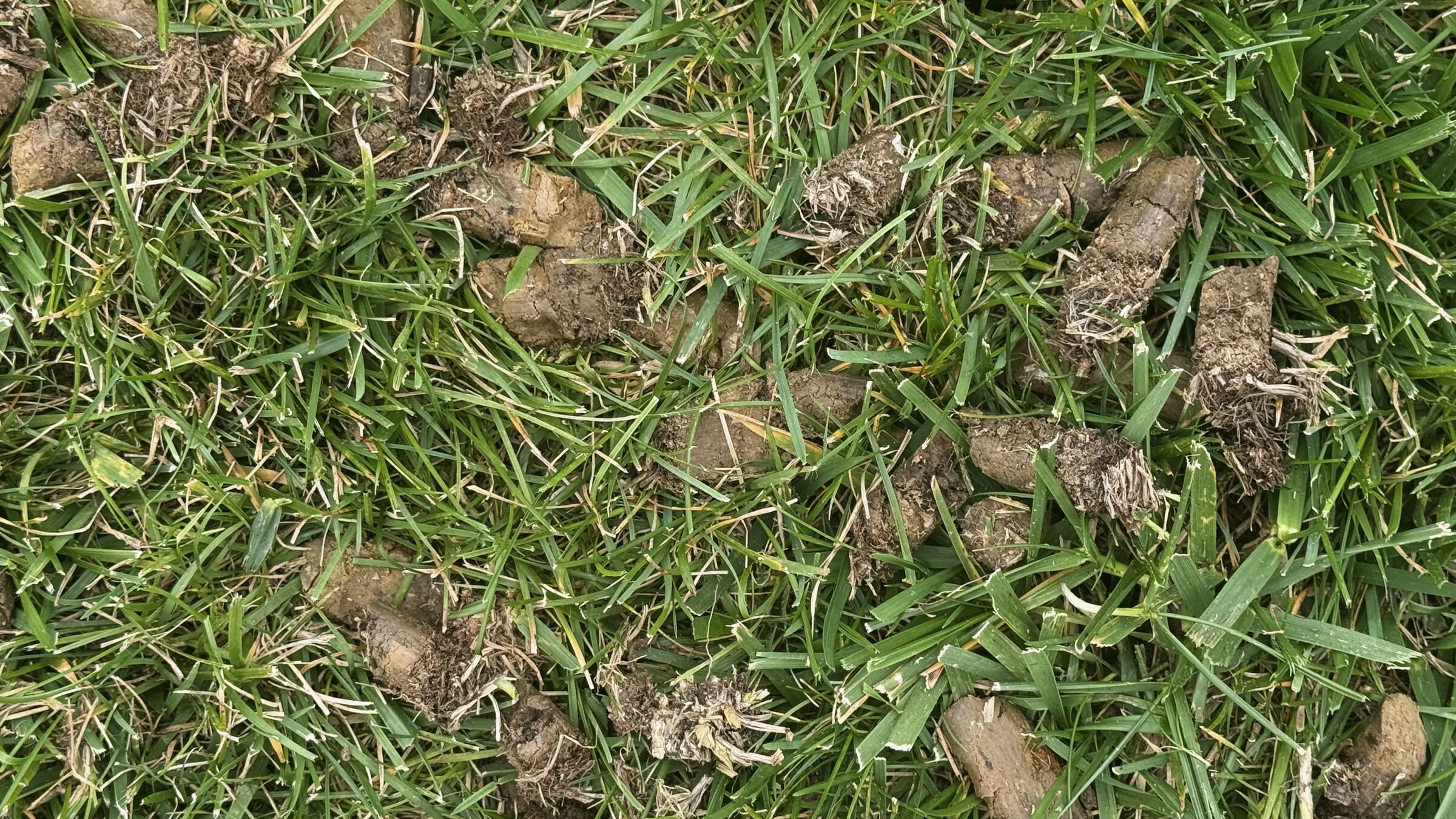
Chinch bugs are infrequent in Ohio but cause hot-weather patches that look like drought, and control is warranted at about 25 to 30 per square foot. Billbugs cause mottled, thinning turf from mid to late June, and the grass stems snap off easily at ground level. Sod webworms are rarely a problem here, though their damage gets mistaken for heat stress.
Each is handled differently. Liquid chinch bug treatments, for example, generally aren’t watered in, the opposite of grub products. That’s why identifying the insect comes first.
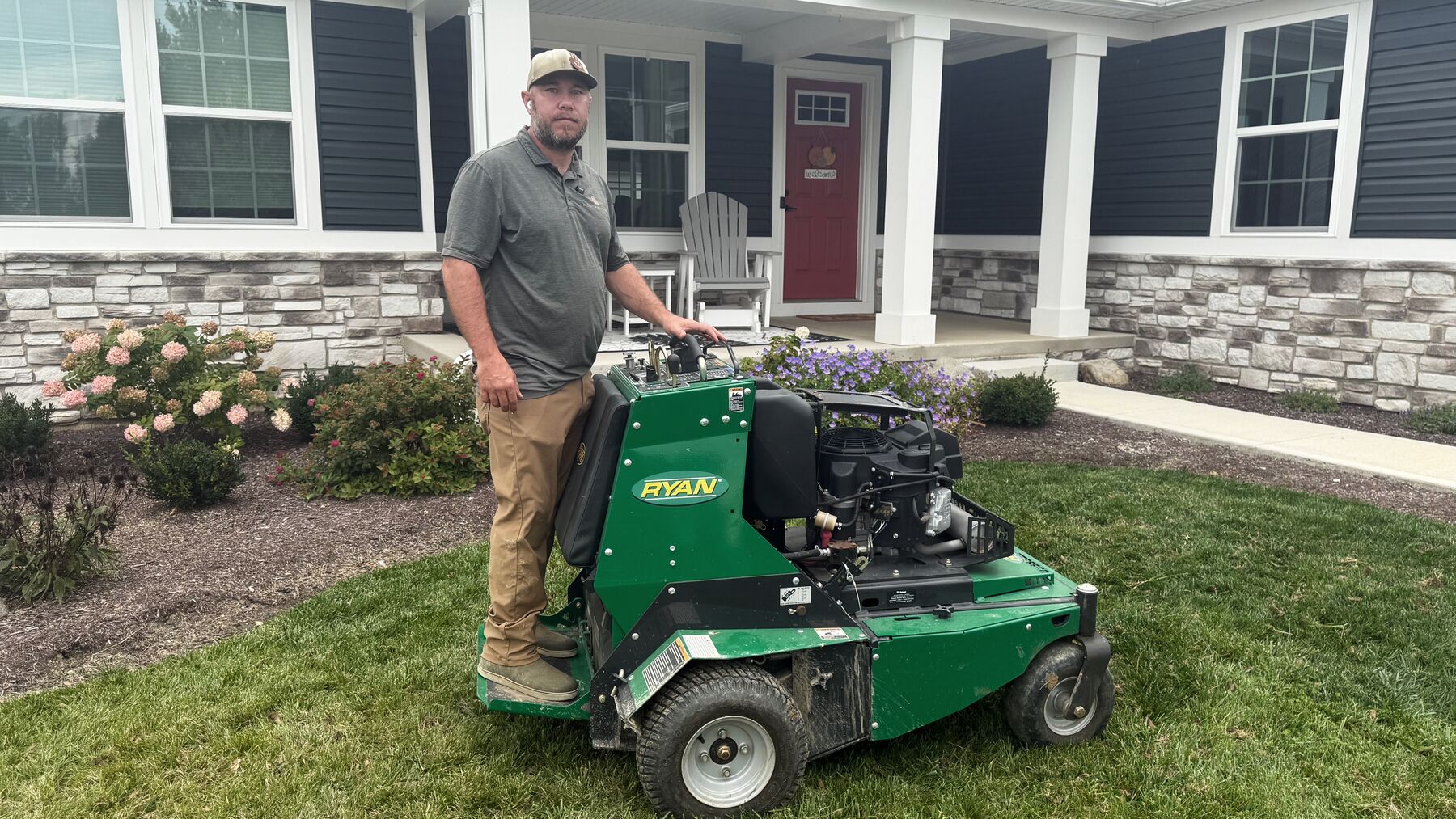
Bob will walk your property and write your 2027 plan for free, whether you hire him or not.
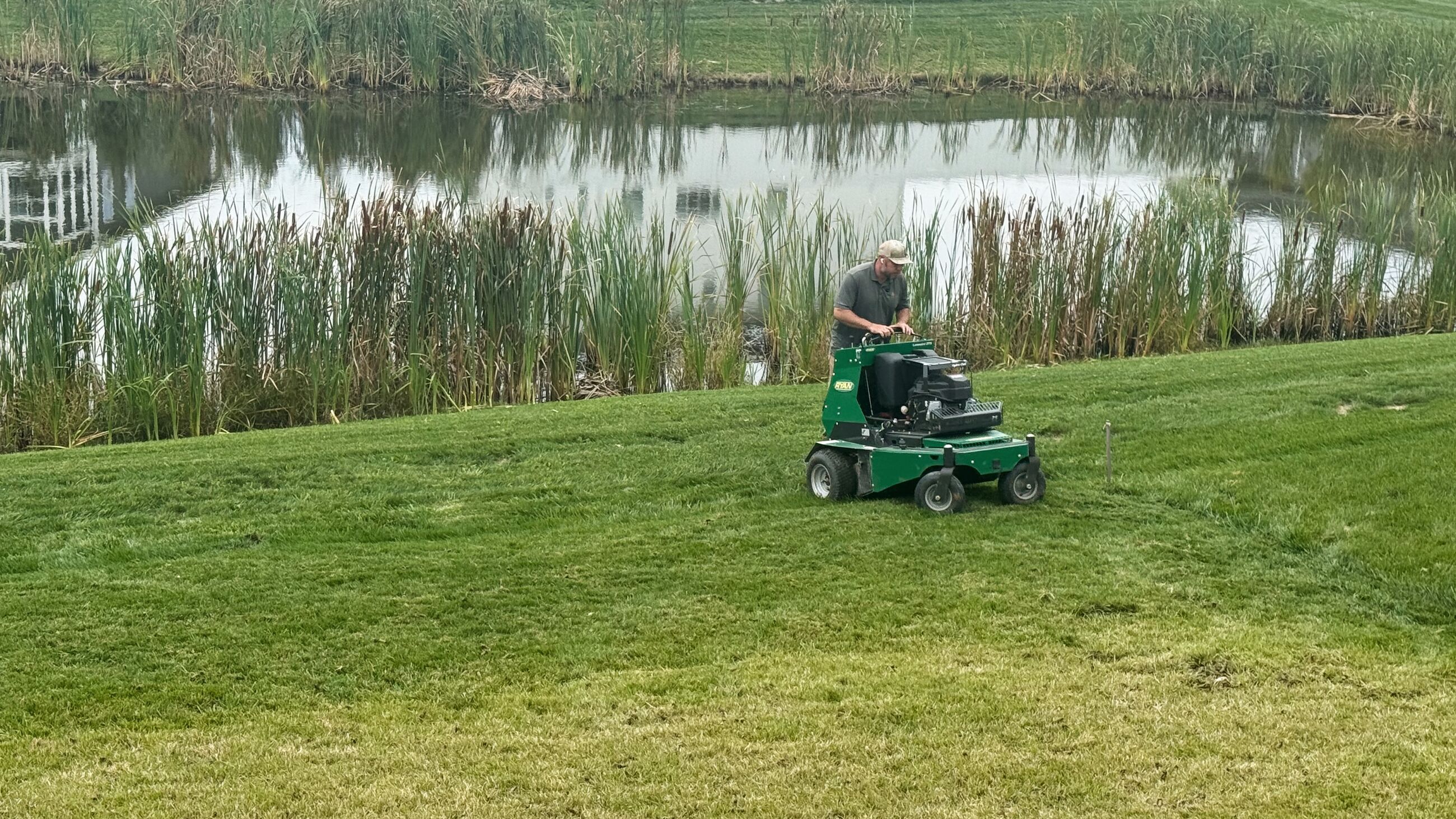
Ohio State notes healthy turf tolerates more grub feeding. Protect the lawn at the right time, keep it strong, and small numbers stop being a crisis.
Tell Bob a little about the property. He’ll walk it, write the plan and go over it with you at no cost, whether you hire him or not. Would you rather talk it through?
(330) 636-6089