A thin layer
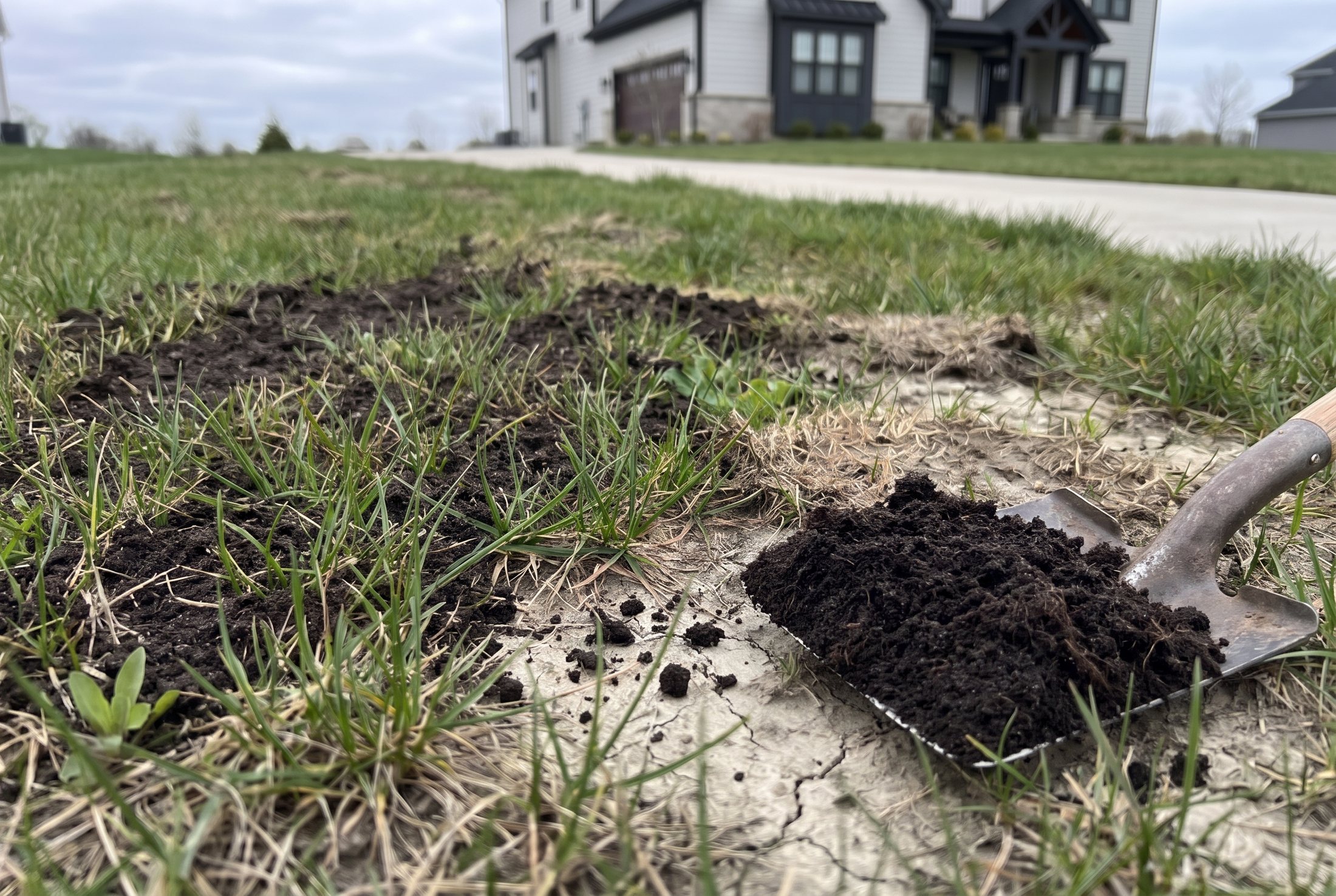
Top dressing means spreading a thin layer of soil or compost over a lawn. The University of Wisconsin says it smooths the surface, helps manage thatch, and can help correct wet areas and bumpy lawns.3

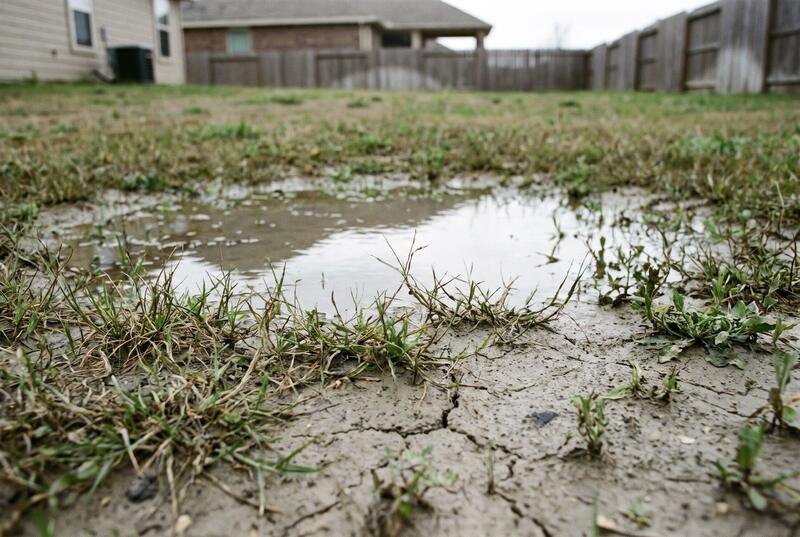
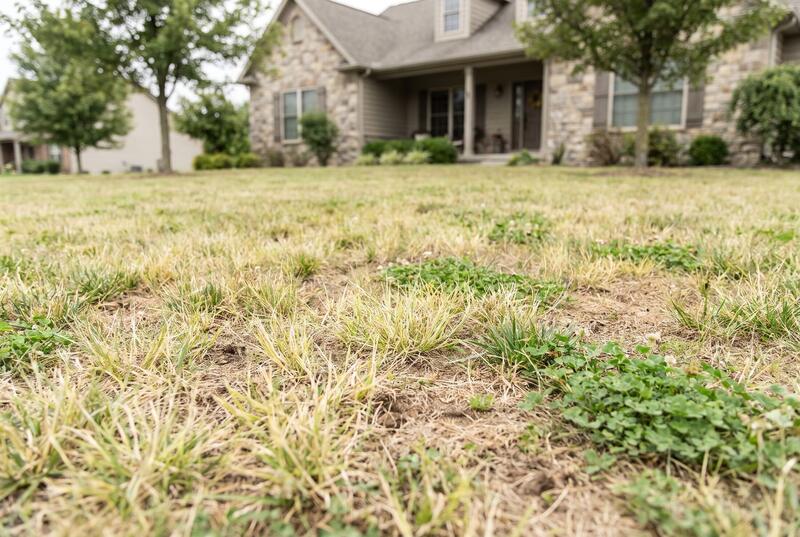
You can see clay between the blades. The low spots stay wet, the high spots scalp, and seed washes off before it roots. Feeding the grass won’t fix what it’s growing in.
Ohio State says many Ohio lawns, especially new ones, grow on soils with a lot of clay, and that they need a more aggressive approach to soil amendment. It singles out excavated soil from residential construction.2, 1
Penn State says a new lawn typically needs at least 4 to 6 inches of good topsoil, and that subsoil at a building site is often severely compacted. University of Georgia Extension adds that topsoil may be harvested and sold before construction starts.8, 9
Top dressing means spreading a thin layer of soil or compost over a lawn. The University of Wisconsin says it smooths the surface, helps manage thatch, and can help correct wet areas and bumpy lawns.3
Ohio State says to apply no more than a quarter inch per application on an existing lawn. Wisconsin adds that at least half of each grass blade must stay visible, so building soil up takes several applications.1, 3
Wisconsin recommends core aerating to mix new soil with the soil underneath, creating a transition layer that helps water move down. Iowa State calls a thin layer applied with core aeration one of the best methods.3, 6
In an Ohio State trial, a quarter inch of compost raked and watered in improved lawn color and density for about 18 months.2
Wisconsin and Penn State warn that material left sitting on top, or that doesn’t match the soil below, can form a layer that blocks water and roots. Working it in through aeration is the fix they describe.3, 4
Wisconsin says to check topsoil for rocks, debris and weeds such as quackgrass, and to avoid farm soils that may carry herbicides like atrazine.3
You don’t know what’s under your grass.
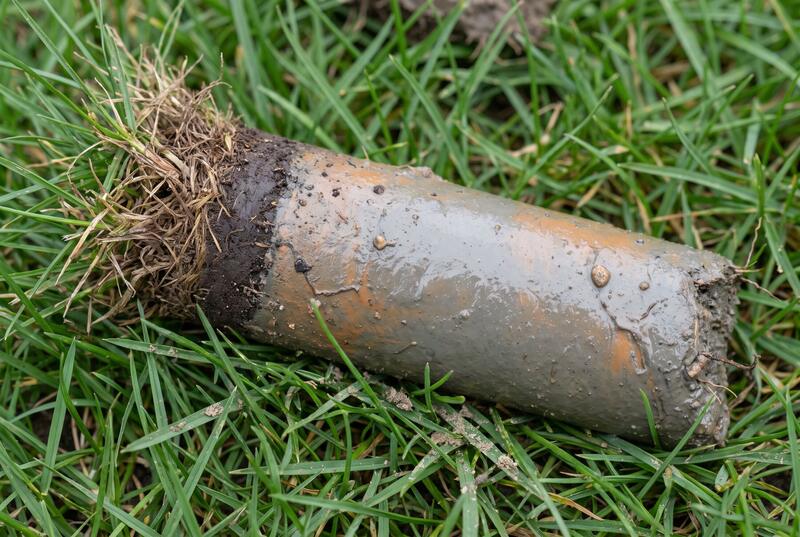
We pull a plug first and show you how much topsoil you have, and whether top dressing is the right fix.
New soil could just sit on top.
We core aerate first, then spread the top dressing so it falls into the holes and mixes with the soil below.
Too much at once smothers the grass.
We keep each layer thin so the grass grows up through it, then come back for the next one.
The yard is full of low spots and bumps.
We build the low spots up a little at a time instead of burying them in one go.
Core aerate while the grass is actively growing, in spring or fall.
Spread a thin layer of our topsoil and peat moss mix by hand or with a spreader.
Rake or drag it into the aeration holes, keeping the grass blades visible.
Come back over the following seasons to build the layer up.
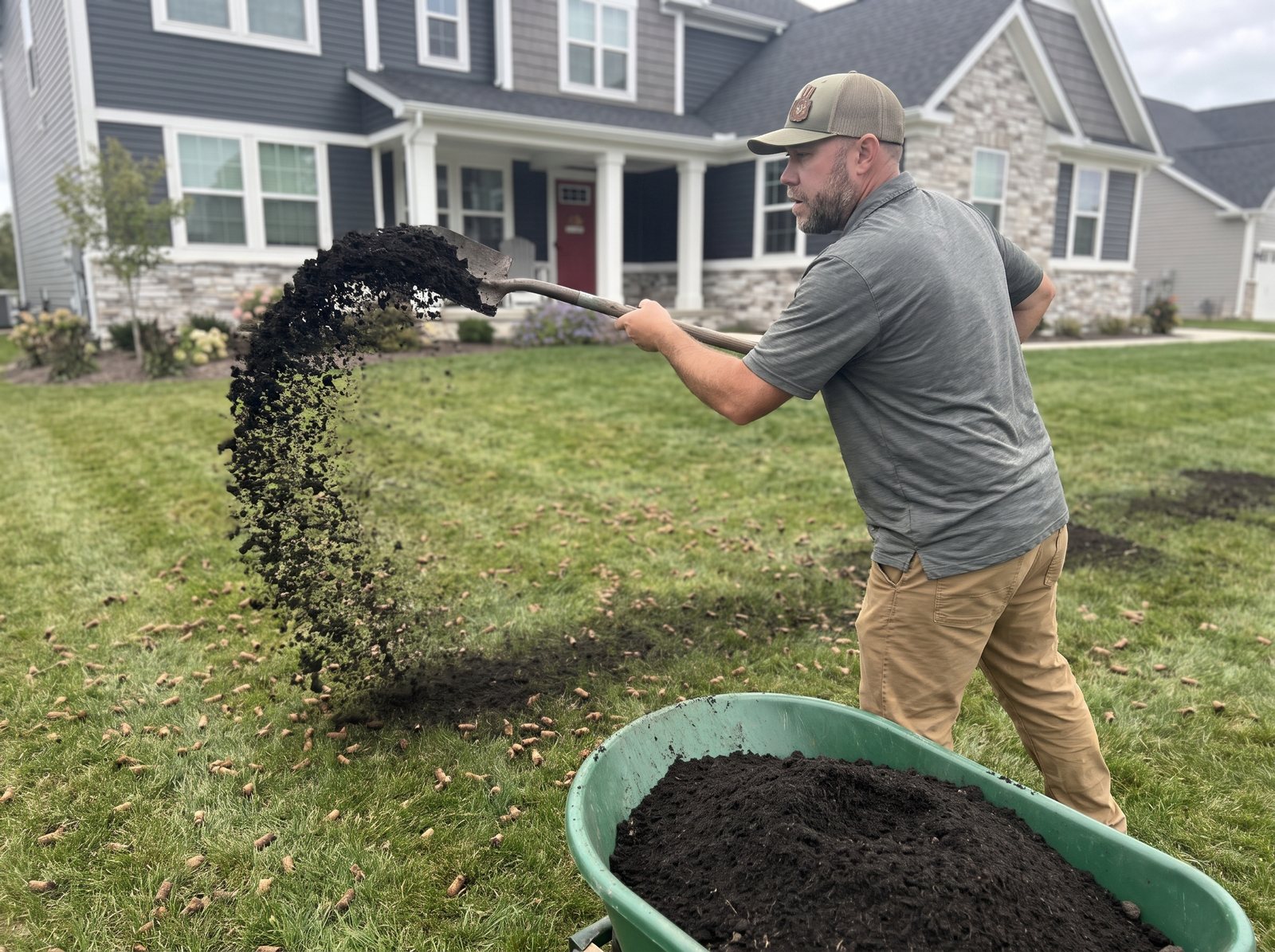
“A little bit up here is going to be your topsoil. You can kind of see it break up a little bit easier than the clay down here.”
Bob on the mix he spreads over clay lawns: “I use 50-50 top soil, 50% peat moss.” He uses it to loosen the clay a little at a time, one thin layer after another.
Bob will walk your property and write your 2027 plan for free, whether you hire him or not.
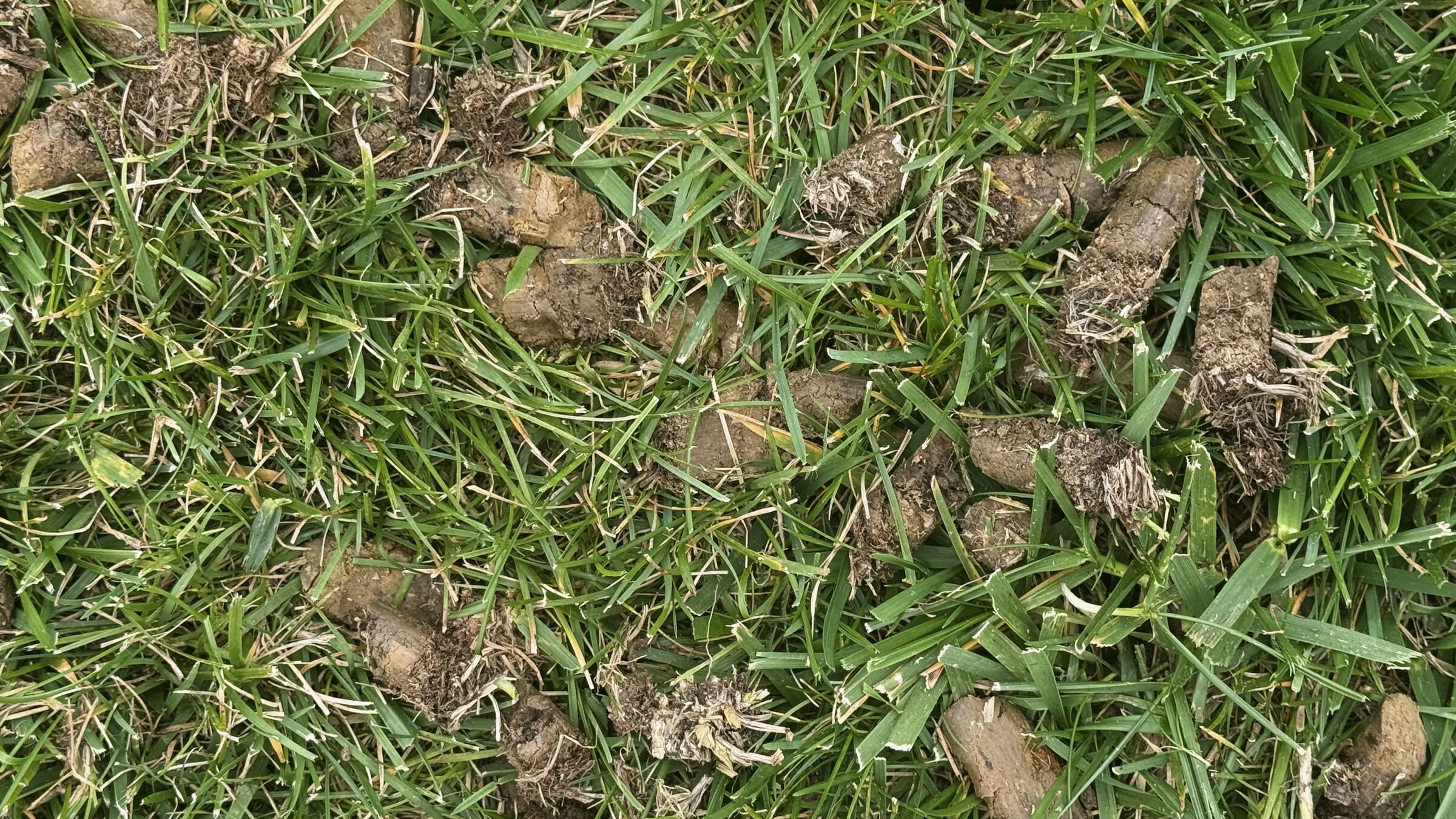
It doesn’t happen in one visit. A thin layer at a time, worked into the soil, is how the ground under your lawn changes, season by season.
Tell Bob a little about the property. He’ll walk it, write the plan and go over it with you at no cost, whether you hire him or not. Would you rather talk it through?
(330) 636-6089