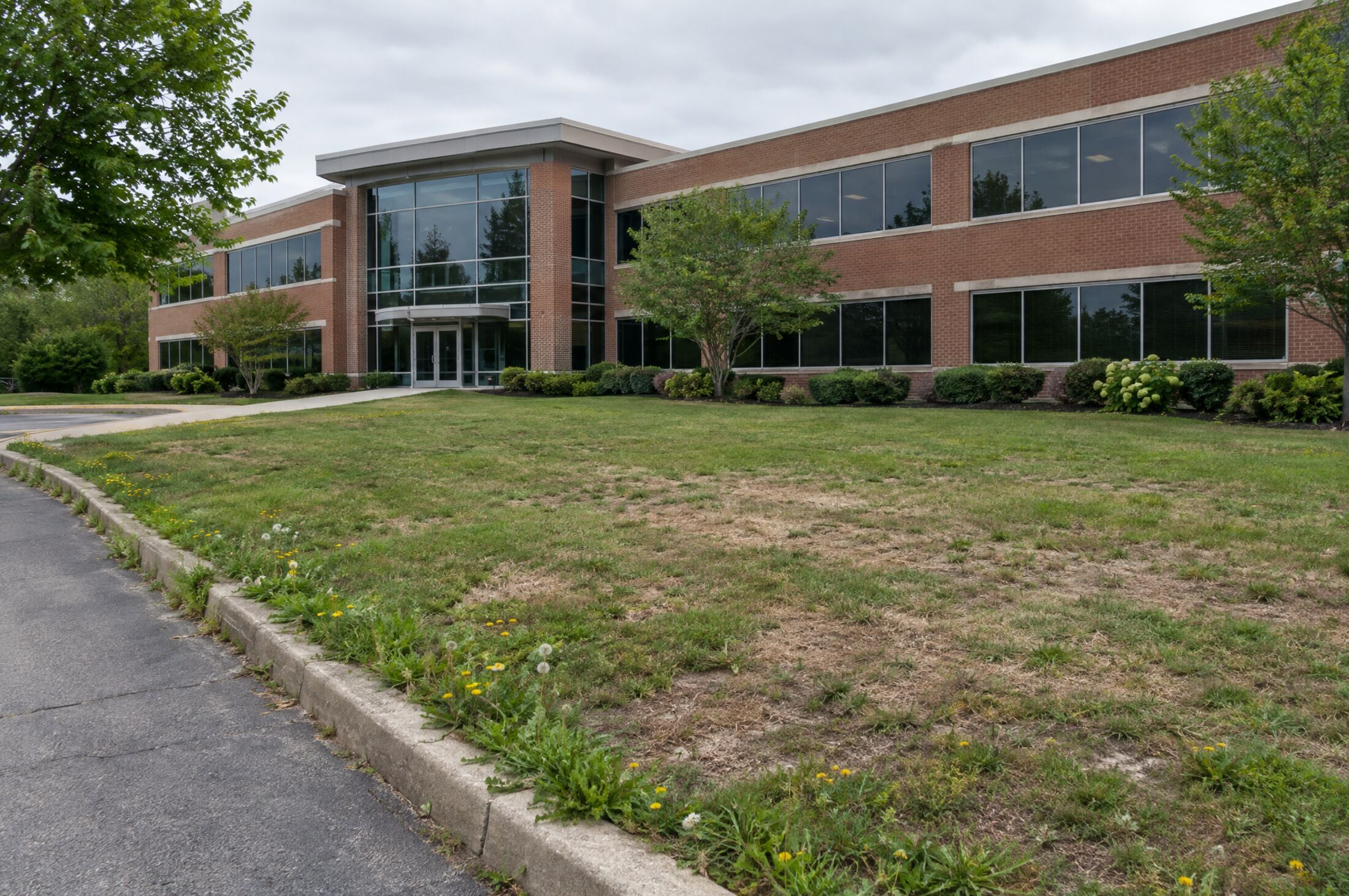
A two-story brick office building with a thin, weedy front lawn along the curb
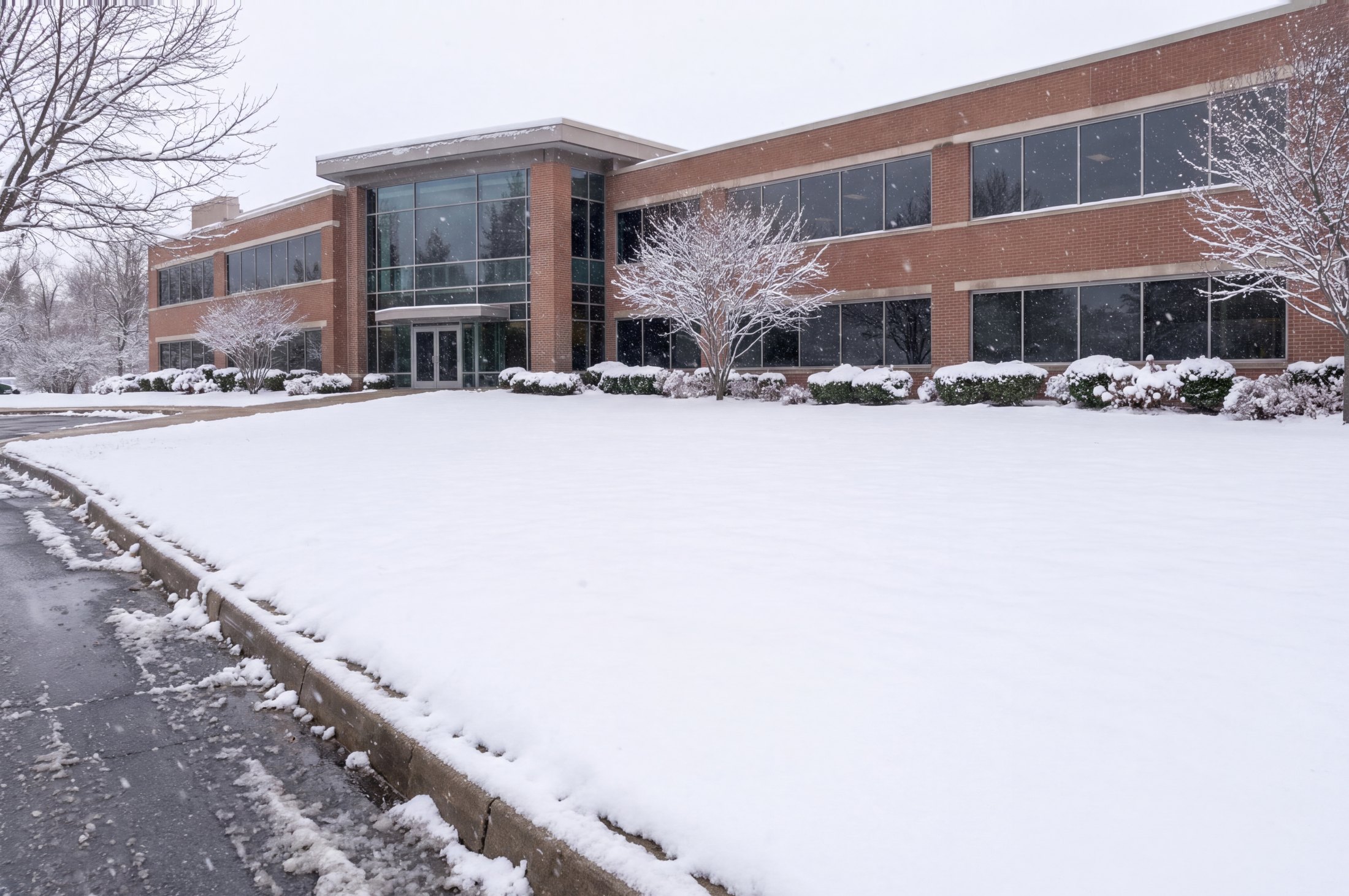
The same office building after the first snowfall, its lawn hidden under several inches of snow
Pull the snow down
Buckeye Fertilization · 2027 grounds programs

Your building makes the first impression. Do the grounds back it up?

Settle the 2027 grounds program in January, not in the April scramble, with one accountable person for every acre.

Sign by January 31 and save 10% on the 2027 season. Sign up by January 31, 2027.

Not ready yet?
The round most properties miss

Spring on the grounds gets decided in January.

Crabgrass sprouts once the top inch of soil holds about 54°F for a week. The preventer has to be down before that, and after that, Ohio State says, “it will not be effective.”1 Ohio State prefers early April for it.2 The average last snow in Cleveland and Akron-Canton comes in early April too, and Akron-Canton has seen snow on or after March 28 in 29 of the last 36 years.5, 6

If your association runs on a January fiscal year, the Community Associations Institute says its budget is typically approved by mid-November,7 so the 2027 money may already be set. A program signed in January spends it on the rounds that matter and gives you real numbers for the next budget. Seed and preventer also have to be planned together, because the usual preventers stop new grass seed too.3, 4

2027 plans · Prices shown are per acre of maintained turf, with a one-acre minimum.

Pick the program. Buckeye handles every acre.

Grounds Essentials

Feeding and weed control on every acre, timed by the soil and not a route sheet.

$79/month per acre

$1,055 $948 a year when you sign up by January 31

12 equal monthly invoices, net 30 · 6 visits

Established grounds that mostly need the right feeding, a clean start on weeds and a frontage that looks cared for.

  • A winter site walk and a written scope for each turf zone
  • Crabgrass barrier before the soil warms, the round most properties miss
  • Six feedings, with fall as the main one
  • Spring and fall broadleaf weed control
  • Posting and application records for every round
  • Bob checks for grubs and disease at every visit

Made for your property: Bob sets the products zone by zone. The frontage and entrances get the closest attention, shaded lawns along the building are fed lighter, and weed control follows what’s actually growing there.

Reserve and save $107/yr per acre

New Site Recovery, 2-Year

For grounds handed over by the builder with thin turf on packed subsoil.

$249/month per acre

$3,320 $2,988 per year, for 2 years when you sign up by January 31

12 equal monthly invoices a year, net 30, for two seasons · 9 visits a year

Buildings, campuses and associations in their first few years, or taking over grounds from a developer, where the turf never really took.

  • Plugs from each zone at the start and the end, so the owner or board can see the difference
  • A lab soil test for each zone, each year
  • Core aeration in spring and fall, with extra passes on the worst ground
  • Top dressing with Bob’s topsoil and peat mix on the priority zones
  • Spring and fall seeding, with a seed-safe weed program
  • Six feedings and preventive grub treatment each year

Made for your property: No two new sites were left the same. Bob maps where the subsoil is worst from the first plugs, and the aeration passes and top dressing go to the frontage and entrances first.

Reserve and save $332/yr per acre

Bob measures every turf zone at the site walk and prices the agreement by the acre. Three or more properties under one agreement take another 5% off. You see the exact figure, zone by zone, before you sign. Ohio sales tax applies where required. Prices are for the 2027 season.

The whole year at a glance

What Buckeye does, and when.

Three plans on the same calendar, so you can see exactly what each one adds. Every round is timed by soil temperature and weather, not a date on a route sheet.

Each plan’s visits by season
WinterJan–FebSign up by Jan 31ThawMarchEarly springAprilThe round everyone missesLate springMayEarly summerJuneSummerJul–AugEarly fallLate Aug–SepFallOctoberLate fallNovember
Grounds Essentials$79/mo per acre · 6 visits
Site walkBob walks the grounds, maps the turf zones, writes the scope and books your first round.
–
Crabgrass barrierPre-emergent goes down before the soil holds 54°F for a week, with a light feeding.
Spring weedsBroadleaf weeds treated while they’re growing, frontage and entrances first.
Early summerA light feeding and spot weed control before the summer stress.
Late summerSpot weeds, and a check for grub and disease signs in each zone.
Fall feedingThe main feeding of the year, and the fall round for perennial weeds.
–
Late fallA last feeding before freeze-up, so the turf goes into winter strong.
Grounds Complete$143/mo per acre · 8 visits
Site walkWinter site walk, written scope, zone budget and your first-round date.
Thaw reportPlow scars, salt burn and snow mold logged, and soil plugs pulled for the lab.
Crabgrass barrierPre-emergent before the soil holds 54°F, timed around the zones being seeded.
Spring weedsBroadleaf control and a slow-release feeding, scheduled around business hours.
Grub preventionPreventive grub treatment on the priority zones, watered in, with an early summer feeding.
Summer watchSpot weeds, plus a check for disease, insects and drought stress.
Aerate and seedCore aeration and overseeding of the frontage and traffic zones in the best seeding window.
Fall feedingThe main feeding of the year and the fall weed round.
Year-end reviewThe last feeding, and a written review with numbers for next year’s budget.
New Site Recovery, 2-Year$249/mo per acre · 9 visits a yearYear 1
First plugsBob pulls plugs in each zone and maps the site by how much topsoil is left.
Soil testsA lab test per zone, so the corrections are made by the numbers.
Seed-safe barrierWeed control that won’t stop the new seed from coming up.
Aerate, dress, seedCore aeration, a thin layer of topsoil and peat on the priority zones, then seed.
Feed the new turfA feeding for the young grass as it fills in.
Grub preventionPreventive grub treatment, watered in, to protect the new roots.
Summer checkIrrigation advice, plus a check for stress, weeds and disease.
Fall rebuildThe big one: aerate, top dress and overseed in the best window of the year.
Fall feedingThe main feeding of the year.
Year-end reviewThe last feeding, and a written progress report for the owner or board.
Year 2
Plug checkPlugs from the same spots, to show what’s been built so far.
Soil testsRetests to see how the corrections are working.
Crabgrass barrierA full pre-emergent where the turf has filled in. Seed-safe on any zones still being seeded.
Aerate and dressSpring aeration and a lighter top dressing on the zones that still need it.
Grub preventionPreventive grub treatment and an early summer feeding.
Summer watchSpot weeds, plus a check for disease and stress.
Fall rebuildAerate, top dress and overseed the last thin zones.
Fall feedingThe main feeding of the year.
Final plugsThe last feeding, and plugs next to the first ones for the final report.

Read down any column to compare the plans. Tap or hover a visit to see what Buckeye does and why. Exact dates follow soil temperature and weather. On a phone, swipe sideways to see the whole year.

New site recovery

New grounds take two seasons, not one.

When the builder hands over a site, the turf often sits on packed subsoil that was driven over long before the first blade went in. One spring of fertilizer can’t fix that. The New Site Recovery, 2-Year rebuilds the ground first: core aeration, thin layers of top dressing worked into the holes on the priority zones, seed in the fall window, and feeding the new turf can actually use. Year one has 10 visits; year two keeps building.

How top dressing works

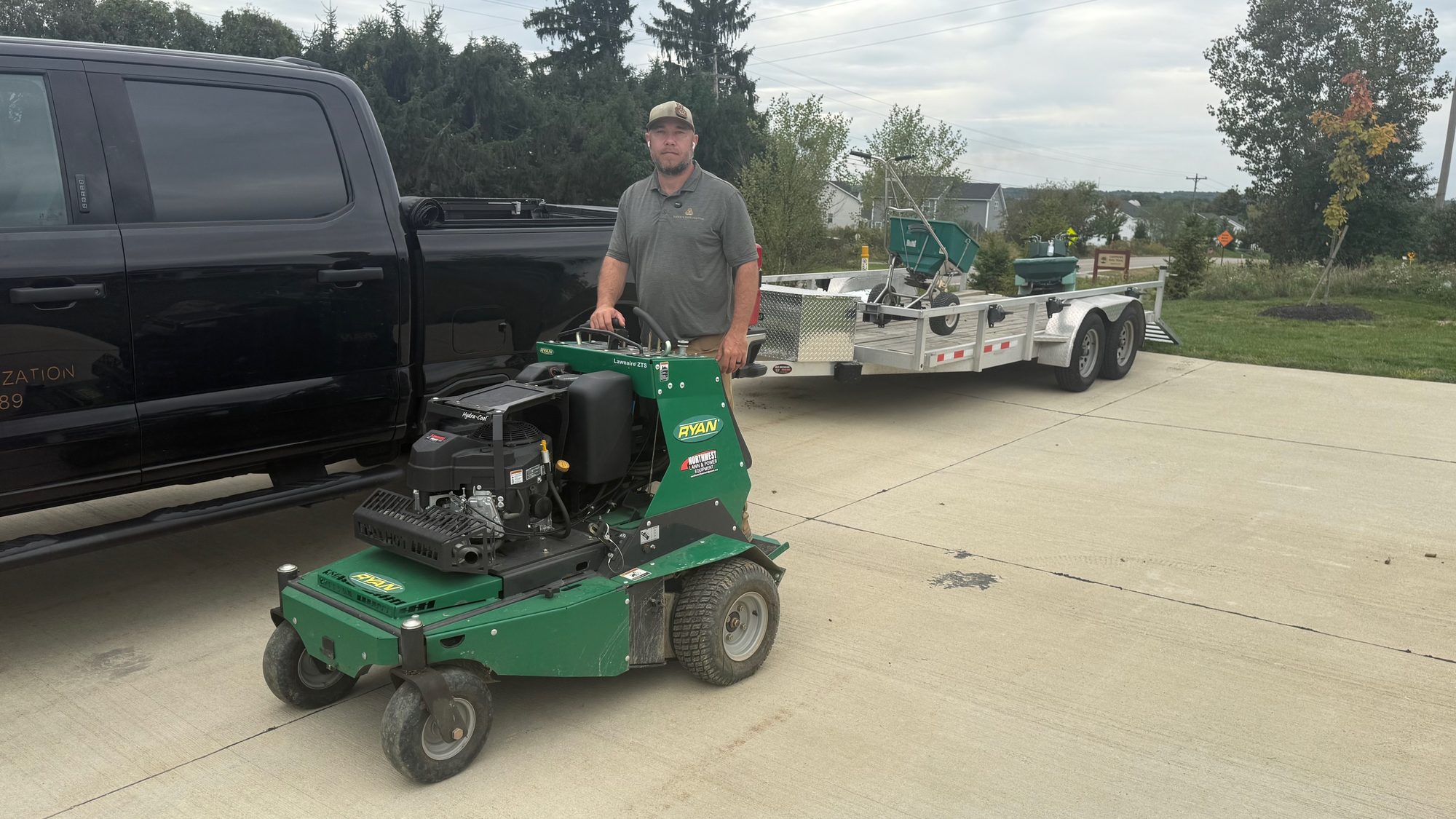
Bob with his aerator and the Buckeye Fertilization trailer
  1. Month 0

    January. Thin turf on packed subsoil. Bob pulls plugs in each zone and maps the worst ground.

  2. Months 3–4

    The first aeration opens the subsoil. The first thin layer of topsoil and peat goes into the holes on the priority zones, then seed.

  3. Months 8–9

    The fall rebuild, the biggest step of the plan: aeration, top dressing and overseeding in the best seeding window.

  4. Month 12

    The second round of plugs and a written progress report you can take to the owner or board.

  5. Months 15–21

    Year two repeats the work where the site still needs it, and the thin zones fill in.

  6. Month 24

    The final plugs next to the first ones. From here the grounds move to Grounds Complete.

Why Buckeye

Your program comes from someone who reads turf.

Bob Raeke doesn’t run a route sheet. He pulls plugs from each turf zone, breaks them open and shows you the thatch, the topsoil and the subsoil. Then he writes the scope around what he finds. Within any program, the products, timing and spot treatments change zone by zone, and the frontage comes first.

  • Licensed commercial pesticide applicatorOhio Department of Agriculture · Core + Category 8, turfgrass
  • Established 2023Buckeye Fertilization, Medina, Ohio
  • Education and credentialsPlaceholder: Bob’s education, training and certifications go here
Bob with a plug from a customer’s lawn: “A little bit up here is going to be your topsoil.”
Buckeye or a national chain

Same season. A different kind of vendor.

What you getA typical national chainBuckeye Fertilization
A scope written for your site before the seasonOften a standard program. Ask.Bob walks the grounds in winter and writes the scope zone by zone
Who works out what’s wrongAsk who will be diagnosing your turfBob, licensed in Ohio for Core and Category 8, Turfgrass Pest Control
Plugs showing what’s under the turfAskEvery agreement starts with them
A budget you can hand to a boardAskZone by zone, by month, in writing
Your season’s rate in writingAskPublished here per acre, and locked when you sign by January 31
Who you callAskBob, the owner, with one number for the whole property
What clients say
“People often ask me how my lawn looks so good and I tell them that it’s thanks to you.”
Doug Fisher
“I want to thank you for the excellent job you’ve done with our lawn. It’s never been greener!”
Janice Kraft
“My property is small, but it’s the nicest on the block. It’s like a burst of sunshine every day.”
Lianne Smith
“I was struggling with a severe grub problem, but thanks to the insecticide and grub control services, my lawn is now pest-free.”
Morrisa Emmet
Side by side

Compare the three plans.

Grounds EssentialsGrounds CompleteNew Site Recovery, 2-Year
Winter site walk and written scope✓✓✓
Crabgrass barrier before the soil warms✓✓Seed-safe in year 1
Feedings per year666
Broadleaf weed controlSpring and fallSpring and fallSpring and fall
Posting and application records✓✓✓
Thaw report on plow and salt damage—✓✓
Lab soil test per zone—Every yearEvery year
Preventive grub treatment—Priority zones✓
Core aeration—Fall, traffic zonesSpring and fall
Overseeding—Fall, traffic zonesSpring and fall
Top dressing, topsoil and peat——Priority zones, twice a year
Plugs at the start and the end——✓
Year-end review with budget numbers—✓✓
Visits per year689

Questions before you sign up.

Can you send a certificate of insurance?

Yes. Ask for one with your agreement and it comes with the paperwork, along with Bob’s Ohio commercial applicator license number.

How are applications posted?

Ohio’s lawn notification rule requires signs at conspicuous points on commercial lawns, left in place for 24 hours after a lawn pesticide application.8, 9 Buckeye posts every application and keeps a written record you can ask for at any time.

How does billing work?

One annual agreement, billed in 12 equal monthly invoices, net 30. We’ll put your PO number on every invoice, and we can bill a management company or an association directly.

We manage several properties.

Put them under one agreement. Each site gets its own scope and zone budget, and three or more properties take another 5% off.

Can Bob present to our board?

Yes. The scope and budget are written so a board can read them without a turf background, and Bob can walk the members through them at a meeting.

Will treatments disrupt our tenants or customers?

Rounds are scheduled around your business hours, with the entrances and parking edges handled when traffic is lightest. Tell us your quiet days and the schedule follows them.

Sign by January 31 and save 10% on the 2027 season.

Get the grounds program set before the snow melts.

Reserve by January 31, 2027 and you get:

  • Your per-acre rate locked for all of 2027
  • Your spring rounds scheduled before the rush
  • A written scope and a zone-by-zone budget you can hand to an owner or board
  • Plugs pulled from each turf zone at the site walk, at no charge

Prices are before Ohio sales tax. Billed in 12 equal monthly invoices, net 30, with PO numbers on request. Change or cancel at no charge any time before your first application.

Rather talk it through? (330) 636-6089

Choose your plan

No payment today.

Sources

  1. Managing Crabgrass in Turf. Stachler, Ohio State University, BYGL, 2018.
  2. Buckeye Turf Newsletter, Winter 2025-2026. Ohio State University, 2026.
  3. Early Spring Lawn Care. Sherratt, Carr & Gardner, Ohio State University, 2025.
  4. Spring seeding guidance (AY-20). Purdue University.
  5. How much snow has fallen in Ohio? (citing National Weather Service averages). Cincinnati Enquirer, 2026.
  6. Daily snowfall, Akron-Canton (USW00014895), 1991 to 2026. The count is our calculation. NOAA National Centers for Environmental Information.
  7. Community Association Budgeting Basics. Community Associations Institute, 2022.
  8. Ohio Admin. Code 901:5-11-09, Notification requirements for lawn pesticide applicators. State of Ohio.
  9. Lawn posting requirements. Ohio State University Pesticide Safety Education Program.
  10. Fall Lawn Care. Ohio State University, BYGL.
  11. Fertilizing Established Cool-season Lawns (AY-22). Purdue Extension.
  12. White Grub Identification, Biology and Management (ENT-0107). Ohio State University.
  13. Turfgrass Establishment Series: Seedbed Preparation. Ohio State University.
  14. Buckeye Turf Newsletter, Summer 2026. Ohio State University.
  15. Soil Testing for Horticultural Needs (HYG-1132). Ohio State University.
  16. Lawn Establishment. Penn State Extension.
  17. Ohio Commercial Pesticide Applicator Requirements (ANR-0140). Ohio State University.
  18. Category 8: Turf Pest Control study guide. Ohio State University Extension.
January pricesSave 10% by Jan 31
Call (330) 636-6089Free plan