About 7% higher rent
In a study of 85 office buildings and 270 leases in the Cleveland area, good landscaping was associated with about 7% higher rent. More turf alone didn’t raise rent. Quality did.1

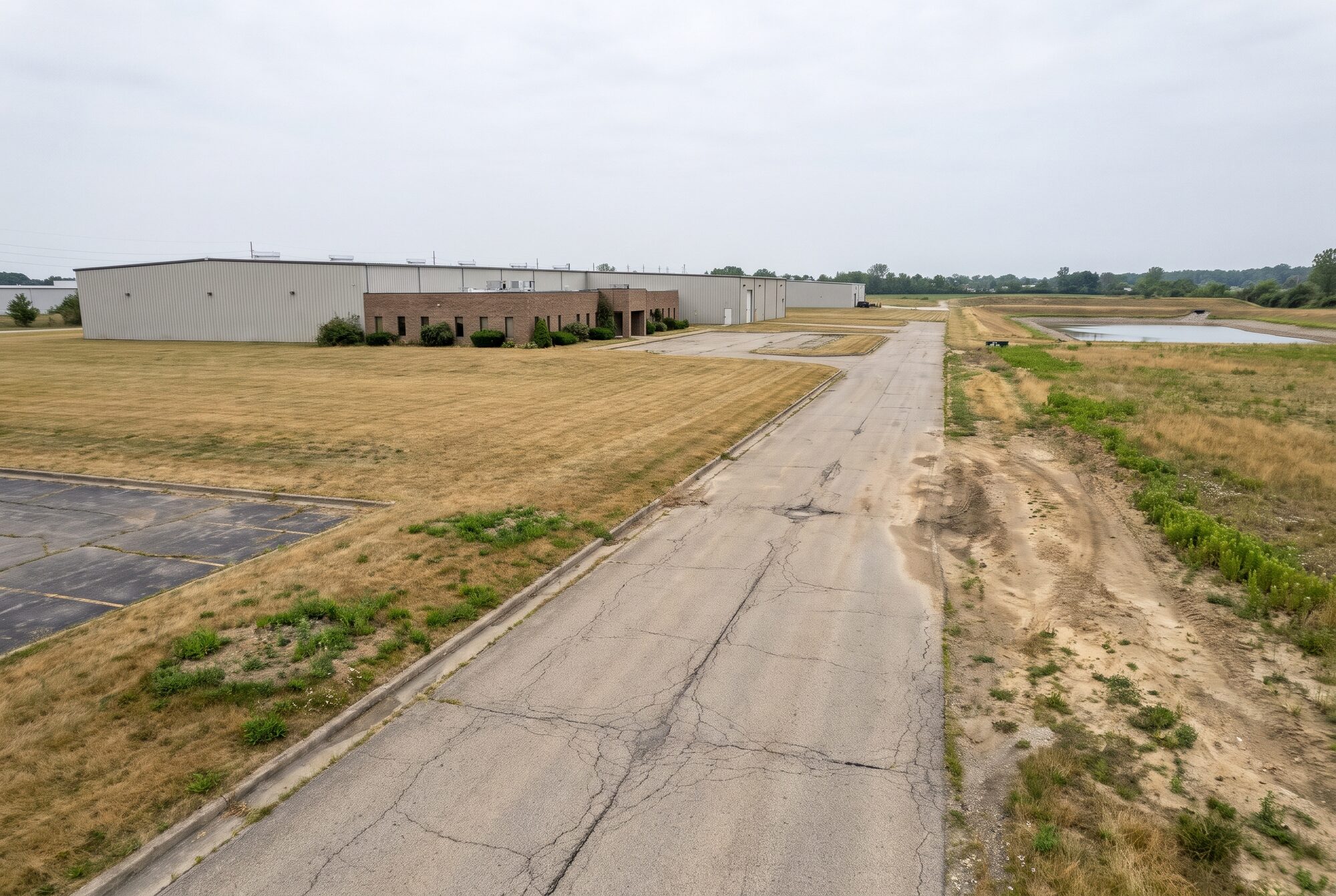
The mowing gets done. The grounds still look tired, the entrance is thinning, and the owner or board keeps asking why. Buckeye Fertilization takes on the turf and the soil under it, on properties of real size, with one accountable person: Bob.
Commercial turf takes a beating homes never see. USDA names vehicles on business lawns as a cause of soil compaction, with restricted roots and increased runoff among the results. Clemson Extension calls traffic probably the leading factor in compaction, and says it weakens grass until it can’t compete with weeds.16, 15
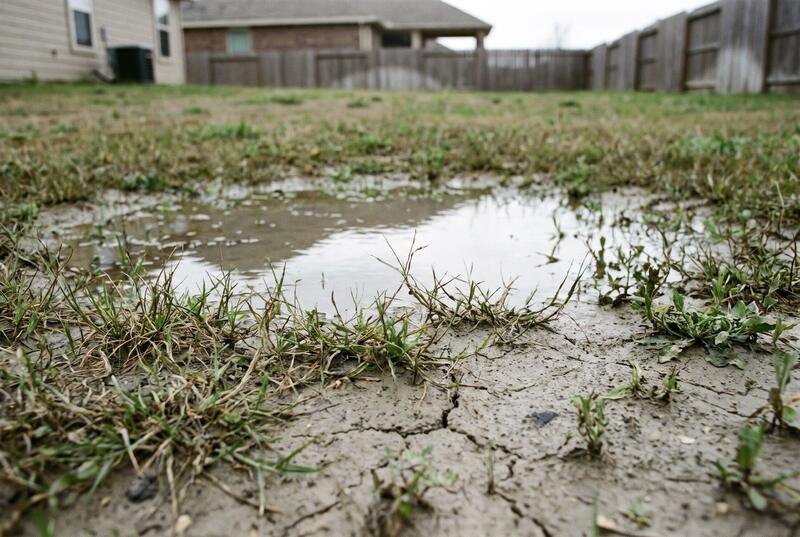
Then there’s the ground itself. A site that’s been graded and built on has usually been driven over long before the first blade of grass went in, and Penn State says construction often leaves subsoil severely compacted. Add Medina County’s heavy, slow-draining soils and you have turf that struggles to root, no matter how often it’s cut.18, 4
A mowing contract doesn’t address any of that. Feeding, weed control, aeration and soil work are different jobs, and they’re the only jobs Bob does.
In a study of 85 office buildings and 270 leases in the Cleveland area, good landscaping was associated with about 7% higher rent. More turf alone didn’t raise rent. Quality did.1
In a 2018 National Association of Realtors survey, 81% of members working with commercial sellers said curb appeal is important in attracting a buyer. Standard lawn care ranked first among ten outdoor projects for buyer appeal. It’s opinion, but from the people selling these properties.2
Construction traffic and compaction cut how fast water entered the soil by 70 to 99% in a peer-reviewed study. Those were sandy Florida soils, not Ohio clay, but the direction is the point: packed ground sheds water.3
USDA soil data shows about half of the county’s mapped acres are rated somewhat poorly to very poorly drained, before anyone grades or builds on them. That figure is our calculation from their data.4
On Ohio’s heavy clay soils, Ohio State’s turf team favors core aeration every fall or every other fall, in mid to late September.5
We looked for a study that puts a dollar return on commercial lawn treatment and didn’t find one. The studies above cover landscape quality in general. Be wary of anyone quoting you a precise number.
Ohio is specific about who can apply pesticides to someone else’s property. This list comes straight from state law. Bob expects to be asked, and any vendor you’re considering should answer it without hesitating.
Ohio won’t let anyone own or run a pesticide business without one. The business answers for what its employees do.6
Applicators may work only in the categories they hold. Turf is Category 8. Mosquito work is a separate category, 10(d).7, 8
The state minimum is $300,000 per occurrence in commercial general liability. Ask for the certificate, and check that it’s current.9
Commercial lawns require written product information to your on-site contact and signs at conspicuous points, left up for 24 hours. Schools can use a permanent sign and must offer advance notice on request.10, 11, 12
Ohio requires applicators to keep them for three years: who, where, when, what product and how much. Ask how you’d get a copy.13
A community association attorney advises boards to always try to negotiate automatic renewal out. Read that clause before you sign anything.14
Nobody owns the health of the turf.
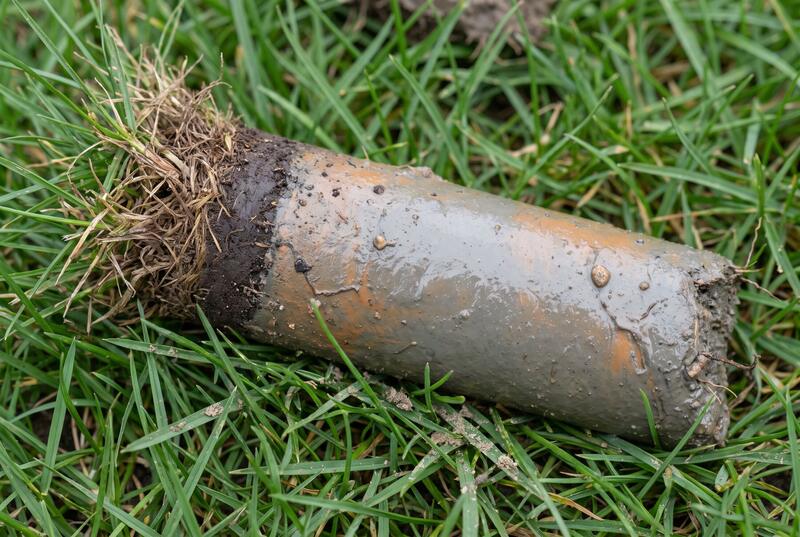
Bob walks the grounds himself, pulls plugs, and writes a program for your site. When you have a question, you call the person who wrote it.
There’s too much ground to fix at once.
He breaks the site into zones and starts where people look first: the frontage, the entrances, the signs. You see results where they count while the back acreage follows.
Trucks and foot traffic have packed the soil.
He aerates on a schedule, overseeds, and tells you plainly when aeration won’t be enough. Power aerators reach 2 to 3 inches, and USDA notes severe sites may need deeper work.
Weeds are taking the edges and the back acres.
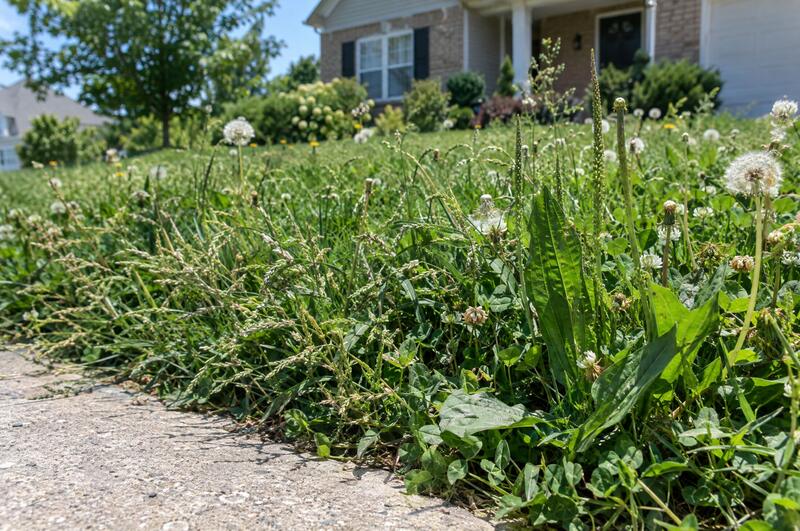
He times treatment to soil temperature and builds density so the turf can compete, and he plans seeding and weed control together so one doesn’t cancel the other.
Plows and salt chew up the curb line every winter.
He records the damage at the thaw and builds the repair into spring. Ohio State says salt changes the soil so roots can’t take up water, so it’s more than a cosmetic problem.
You answer to an owner or a board.
You get a written scope and a budget by line and by month, in a form you can hand up the chain.
Bob walks the property with you, pulls plugs in each zone, and marks what’s traffic, what’s soil and what’s neglect.
Zones, priorities, calendar and cost. It’s yours to keep, whether you hire him or not.
Frontage and entrances first, then traffic areas, then back acreage, phased to fit your budget.
Applications are scheduled around your hours, posted as Ohio requires, and recorded.
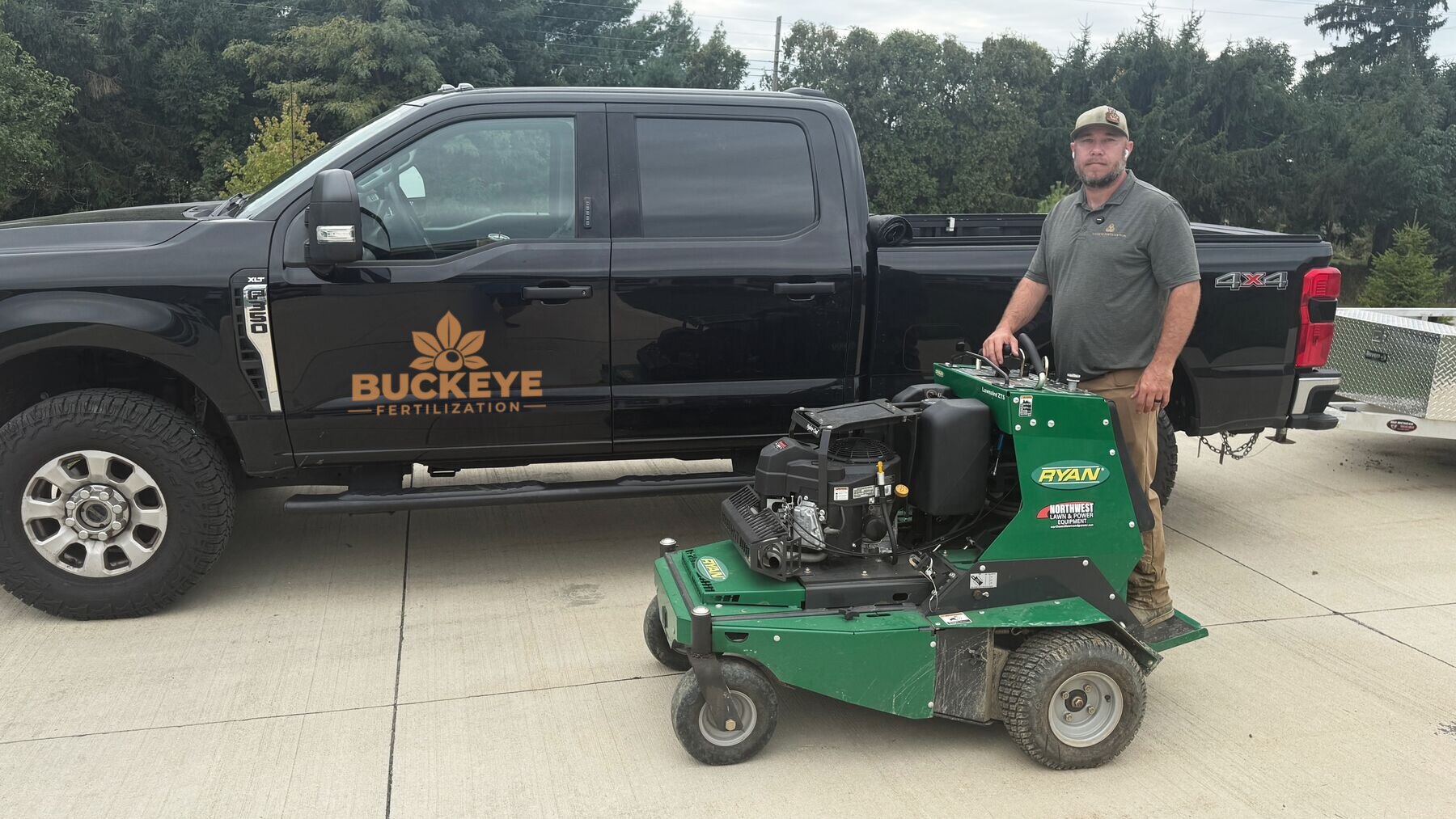
When you hire Bob, Bob is who walks your grounds. He isn’t handing you off to a salesperson and then a crew you’ve never met. He has a stand-on aerator, a stand-on spreader, and a truck and trailer that go where the work is.
He’s also straight about what he doesn’t do. He doesn’t mow and he doesn’t plant shrubs. If your site needs deep soil work or a drainage fix that’s beyond a turf program, he’ll tell you, before you’ve spent money finding out.
And he’ll show you why. There’s a plug of your ground in his hand, in front of you, with the layers you’re paying to fix. It makes for a much easier conversation with your owner or board.
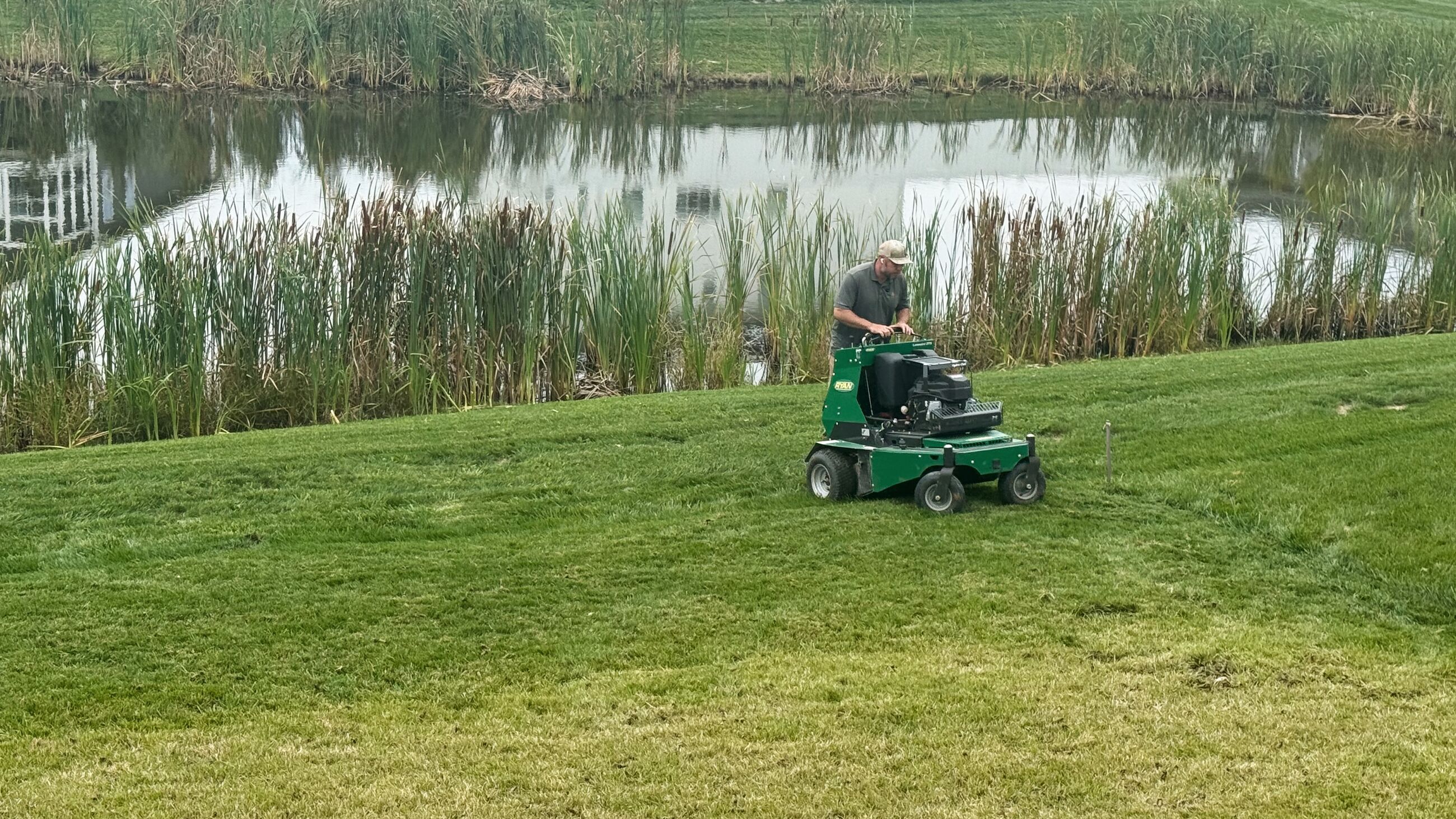
Bob will walk your property and write your 2027 plan for free, whether you hire him or not.
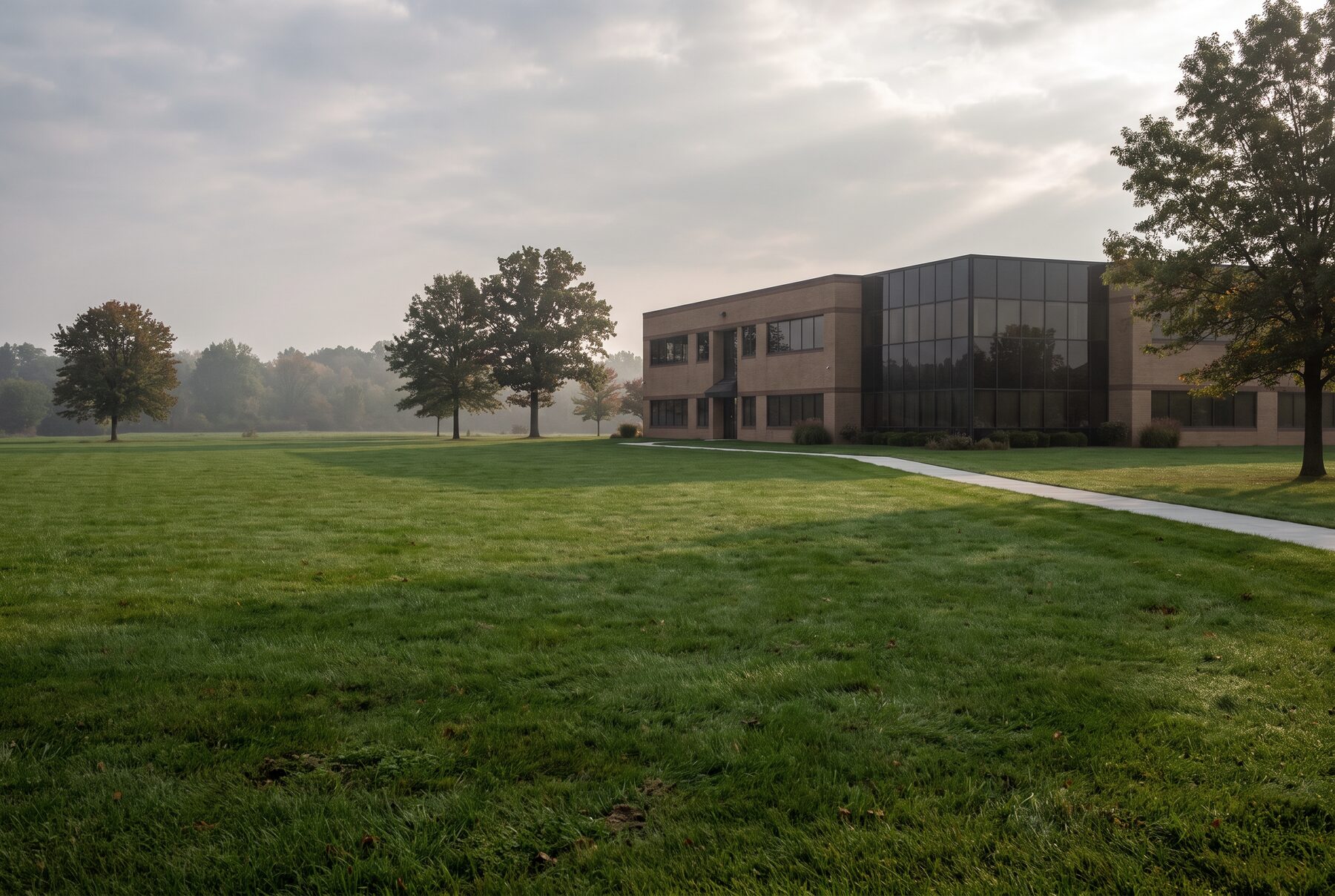
A property that looks cared for from the road, a budget you can explain line by line, and one person to call who knows your turf.
Tell Bob a little about the property. He’ll walk it, write the plan and go over it with you at no cost, whether you hire him or not. Would you rather talk it through?
(330) 636-6089