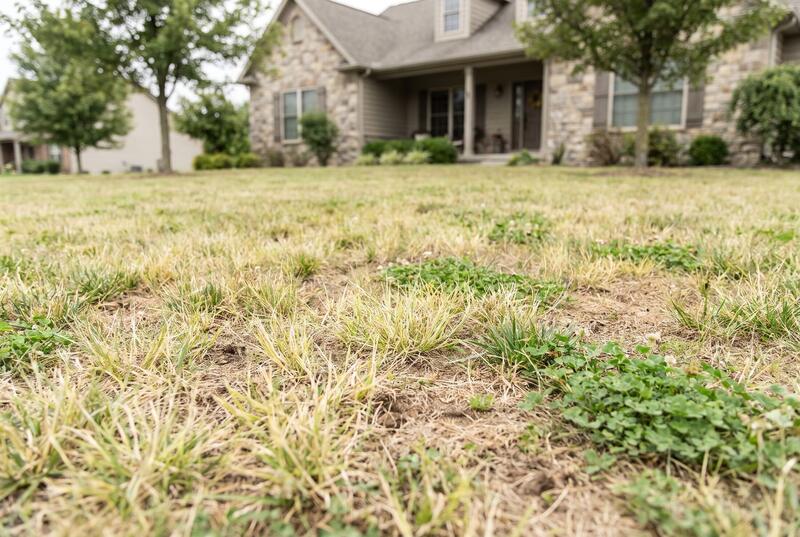
3× more crabgrass
An Ohio State newsletter reports that mowing at 2 inches averaged three times more crabgrass than mowing at 3.5 inches. Its fact sheet agrees that taller mowing significantly reduces weed density.1, 2

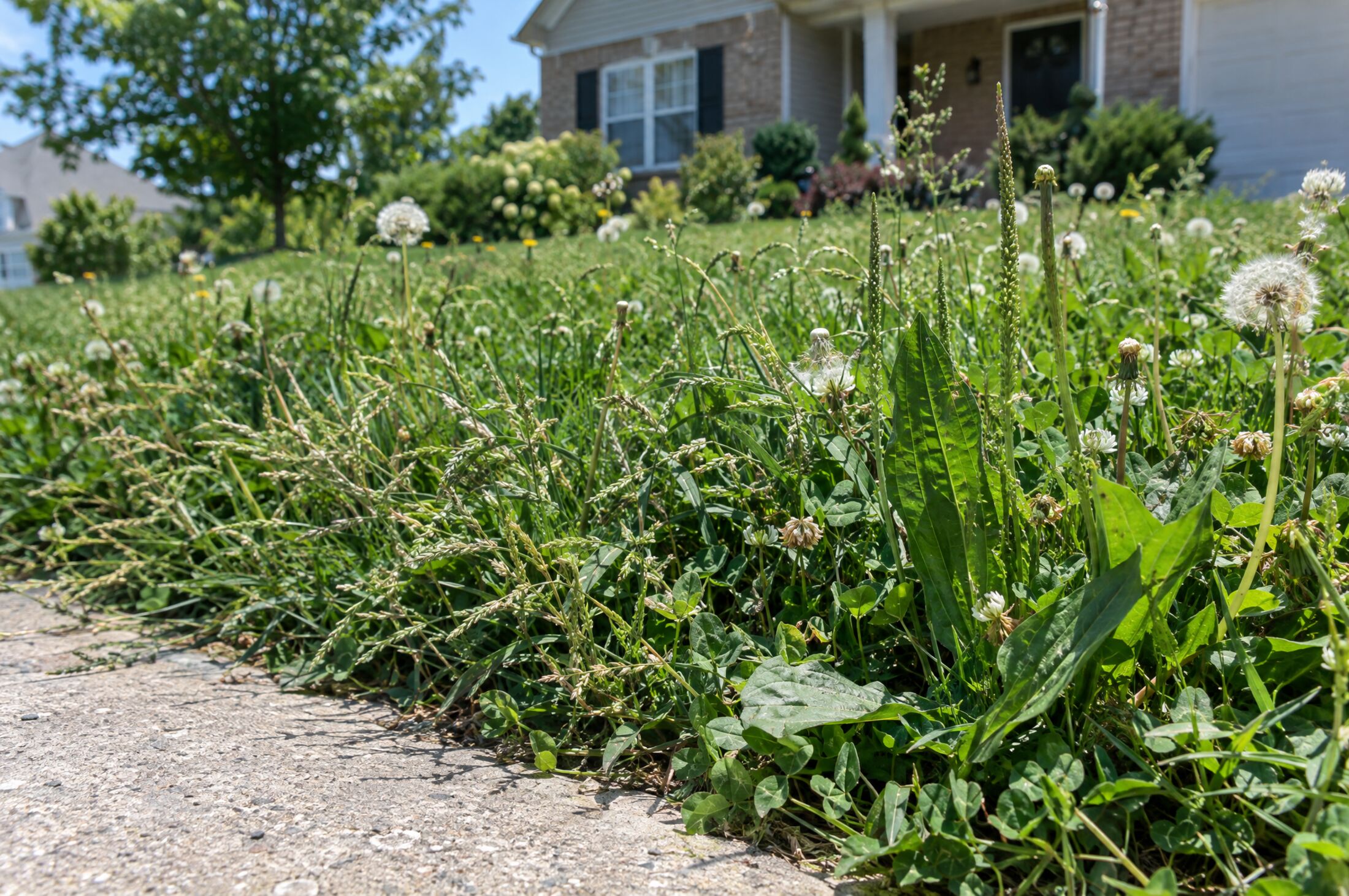
You spray them, and within a few weeks they’re back. It’s the first thing you see when you pull in the driveway, and every year there seems to be a little more of it.
Crabgrass is a summer annual. It dies at frost and comes back from seed, and one plant can produce thousands of them. Dandelions are perennials with deep taproots, and burning off the leaves leaves the root behind. Clover tends to form large patches where turf isn’t getting enough nitrogen, and plantain often points to compacted, heavy soil.10, 13, 11, 12
That’s why one spray doesn’t solve it. Ohio State reports that early postemergence treatment often buys a few weeks, then a new crop of crabgrass comes up from seed. And Purdue is blunt about the long game: broadleaf seeds can persist in soil for 30 years or more, so complete eradication isn’t realistic. The goal is a lawn that out-competes them.1, 5
An Ohio State newsletter reports that mowing at 2 inches averaged three times more crabgrass than mowing at 3.5 inches. Its fact sheet agrees that taller mowing significantly reduces weed density.1, 2
Ohio State says crabgrass starts germinating when soil 2 inches down is consistently around 58 degrees, and that preemergent should go down when it reaches 50.3
That’s when first germination usually happens at Ohio State’s Columbus-area turf center. It runs later in northern Ohio, so the timing here depends on local soil temperature.3
Ohio State explains that perennial weeds send carbohydrates down to their roots in fall, which carries the herbicide with them. It’s the best window for dandelion, plantain and clover.4, 5
Most preemergence products also kill new grass seed, so weed control and seeding have to be planned together. Penn State names siduron and mesotrione as the materials safe at seeding.6, 7
In Ohio, applying pesticides to someone else’s property for hire requires a commercial applicator license, and the business needs its own license and liability insurance.8, 9
Crabgrass comes back every summer.
Bob times preemergent to soil temperature in spring, before germination starts.
Dandelions return no matter what you spray.
He treats perennial broadleaf weeds in fall, when the herbicide moves down to the root.
Clover and plantain keep spreading.
He looks at what they’re pointing to, like low nitrogen or compaction, and treats that too.
The lawn is thin and weeds keep winning.
He builds density with feeding, aeration and seed, and plans herbicides around the seeding.
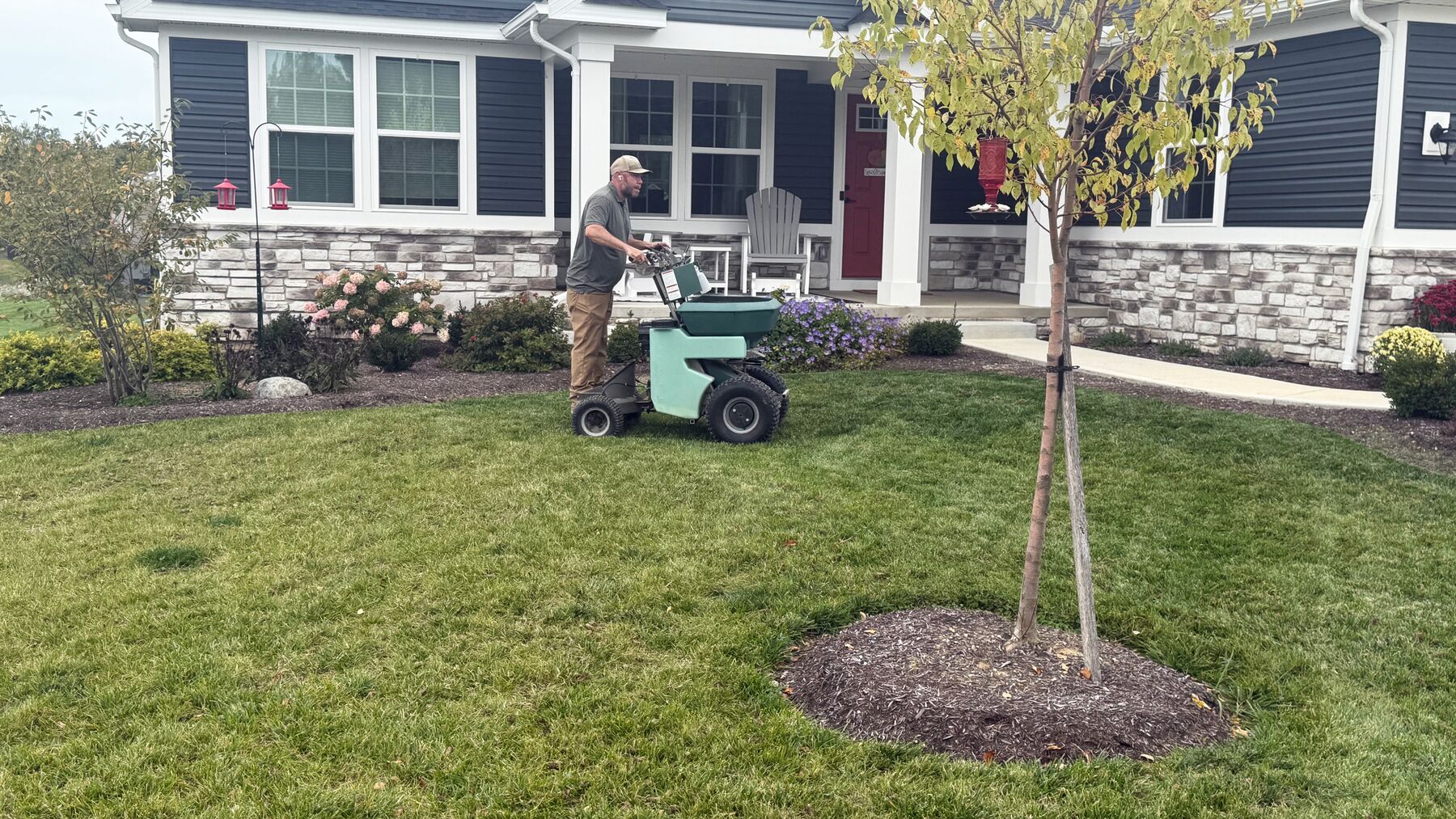
Bob will walk your property and write your 2027 plan for free, whether you hire him or not.
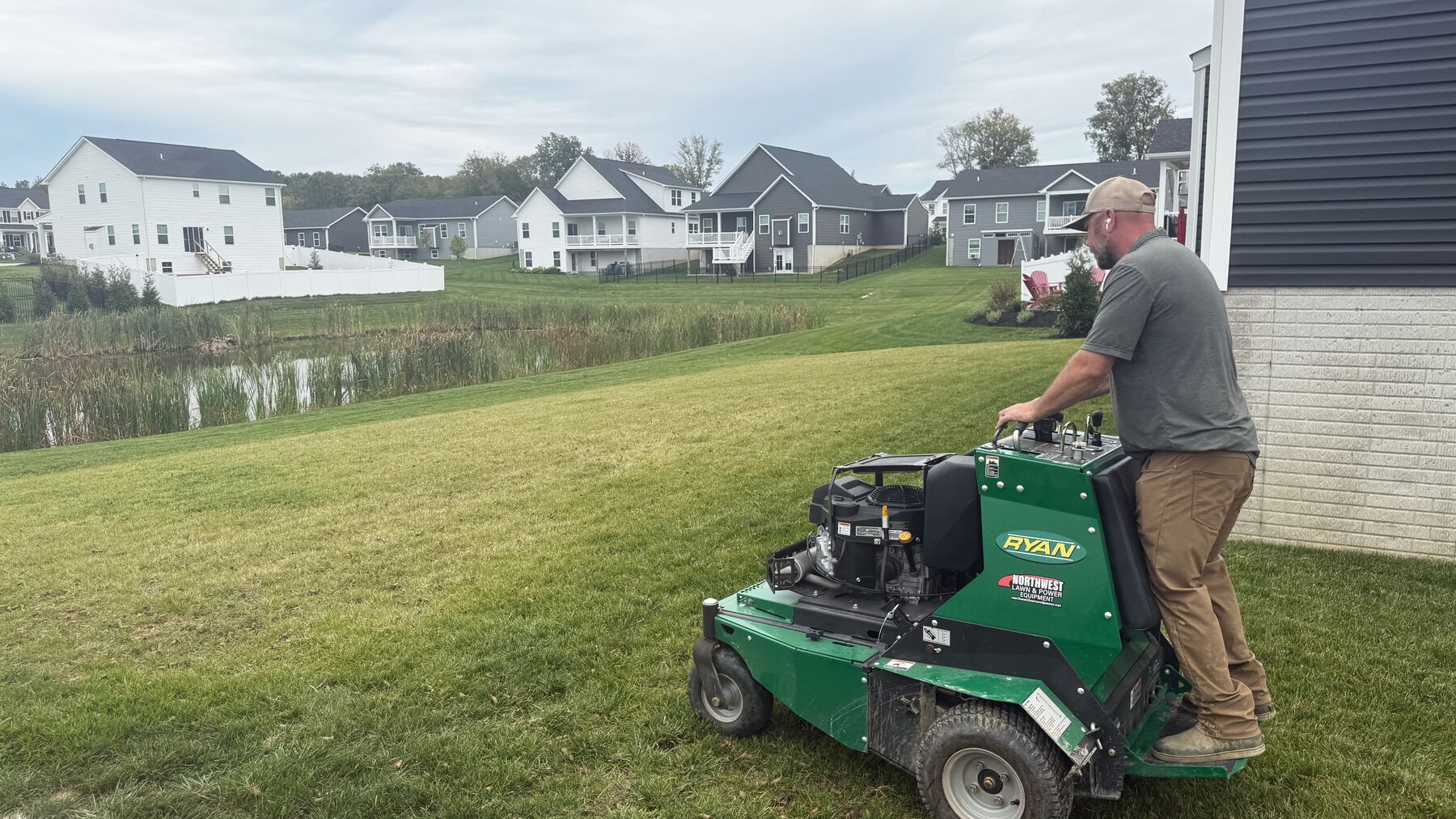
No one can honestly promise zero weeds. A thick lawn, treated at the right times, is your best long-term defense.
Tell Bob a little about the property. He’ll walk it, write the plan and go over it with you at no cost, whether you hire him or not. Would you rather talk it through?
(330) 636-6089